Overview
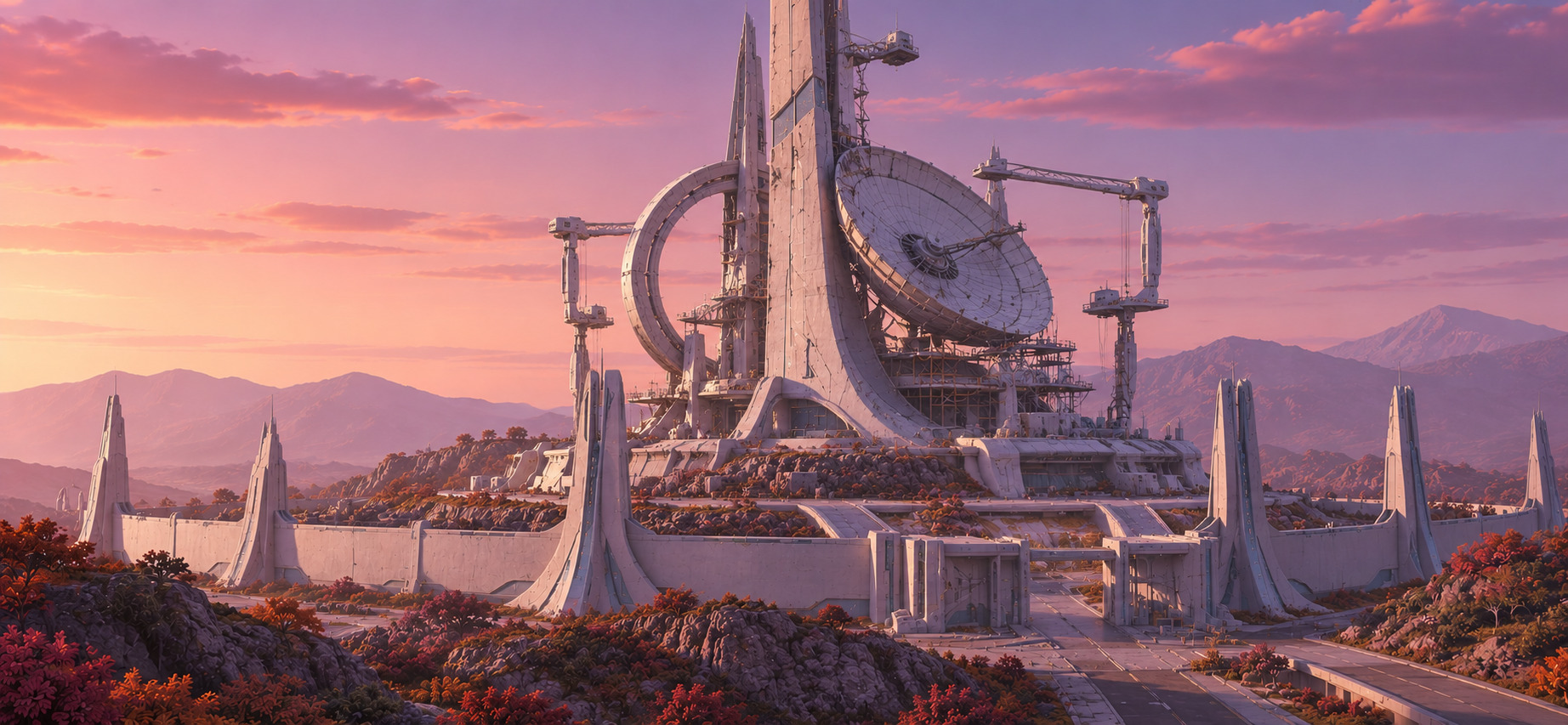
Vargos is the third planet of the homonymous system, a tundra world orbiting two red dwarfs and housing an ancient Precursor Communications Center. The facility was discovered under a rocky plateau and contains artifacts, signals, and databases that are still being studied to understand the knowledge of a lost civilization.
Over the years, scientific complexes, laboratories, and conservation centers were built around the ruins. Archaeotechnological research became the main activity on the planet, attracting scientists, engineers, and historians from various sectors of the USF.
Despite its importance, much of Vargos remains sparsely urbanized. Authorities maintain strict protection measures to preserve both the Precursor structures and the surrounding tundra ecosystems.
Planetary View
From space, Vargos displays extensive continental surfaces in reddish, ocher, and brown tones, interspersed with dark rocky regions and deep blue oceans. Snow is concentrated mainly in the polar ice caps and on the summits of the highest mountain ranges, while white clouds form irregular bands across the surface.
The illumination is predominantly white, with a subtle reddish hue caused by the system’s twin red dwarfs. A thin, pinkish atmospheric halo outlines the complete circumference of the planet, standing out against the dark backdrop of space. At night, a few urban hubs discreetly illuminate the regions where scientific centers are concentrated. Vargos has no rings and is orbited by two small rocky moons.
Surface View
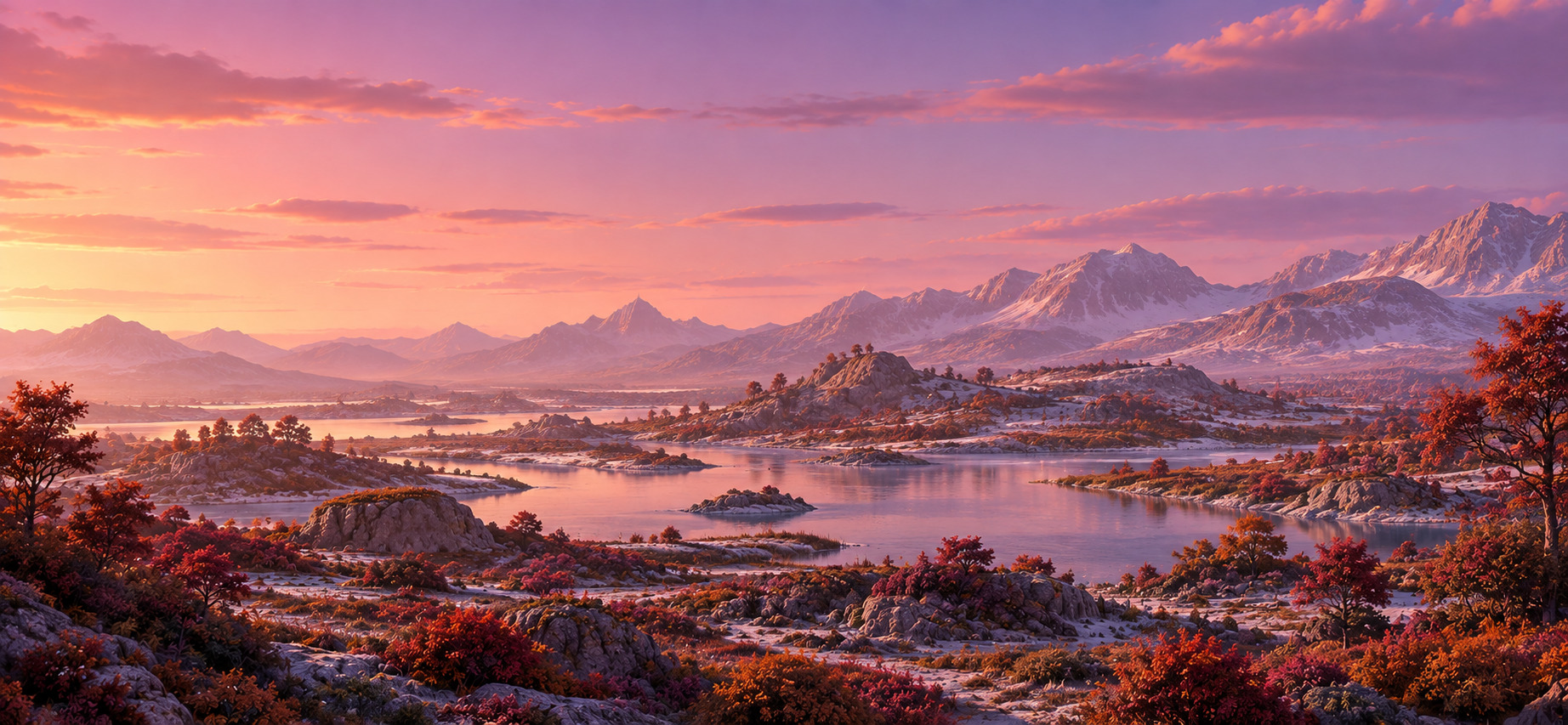
The surface of Vargos is dominated by vast tundra plains, reddish terrain, eroded plateaus, and mountain ranges capped with snow at their highest peaks. Vegetation is concentrated in sheltered zones where mosses, lichens, and cold-adapted boreal forests grow.
The sky presents pale tones with slightly pinkish hues during certain times of the day. The two red dwarfs provide soft lighting, while clouds cast elongated shadows across the terrain.
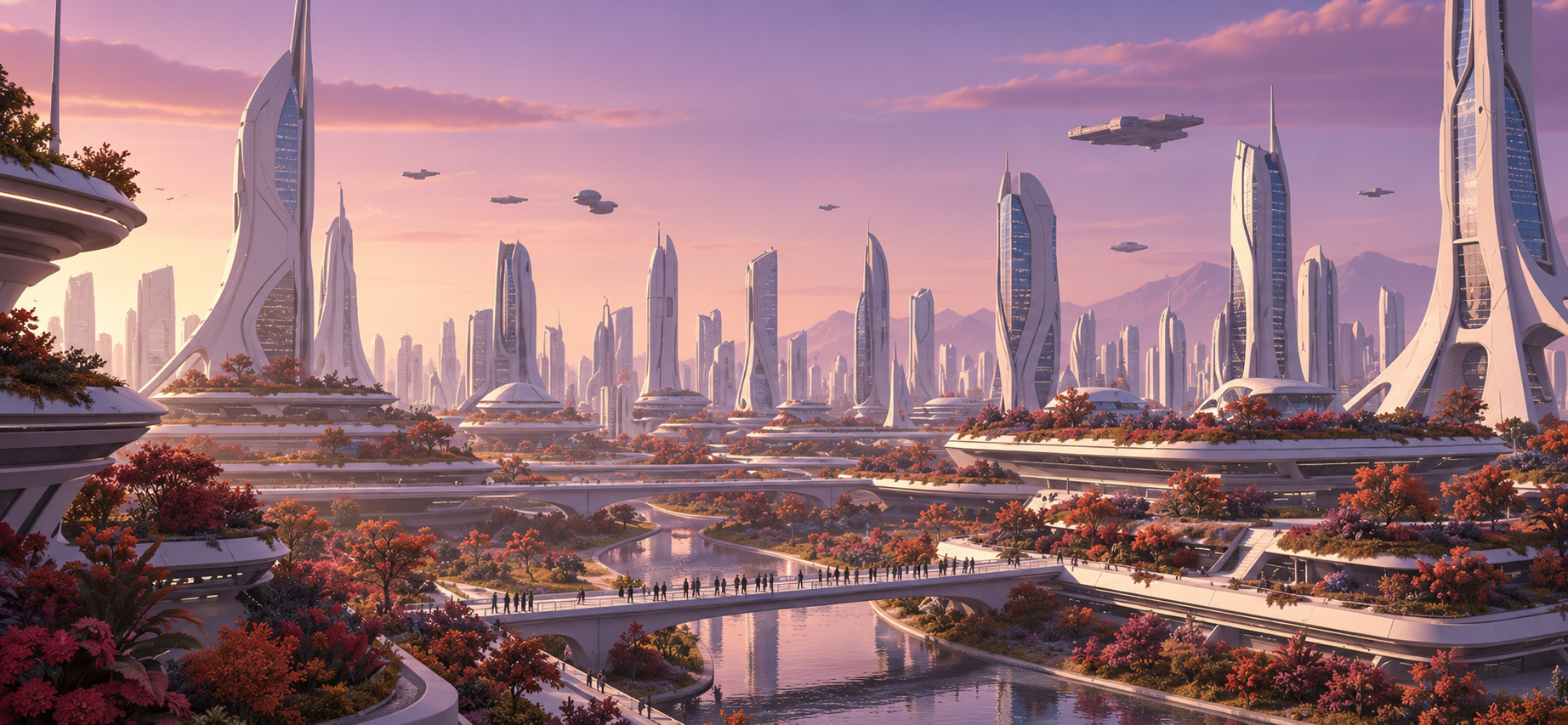
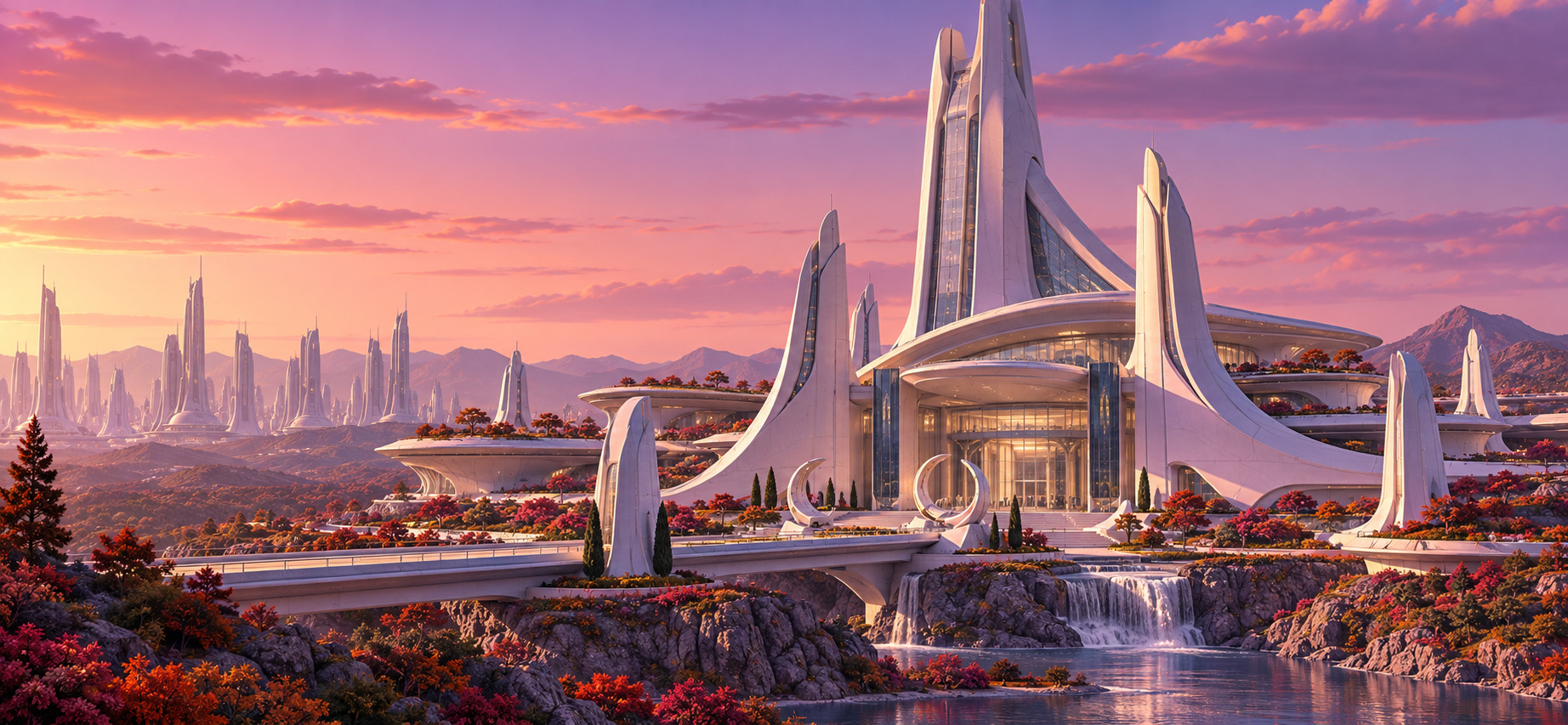
The cities are discreet and built around laboratories, archaeological sites, and research complexes. Roads and transport corridors connect these settlements, traversing virtually pristine landscapes. The environment is cold and quiet, with seasonal winds, freshwater rivers, and ancient Precursor structures projecting from rocky plateaus.
Fauna and Flora
Mosses, lichens, cold-resistant conifers, thick-furred herbivores, migratory birds, and small mountain predators.