Overview
Monarta is a large continental world classified as a Dry Superhabitable World, characterized by extensive arid landscapes, reddish terrain and scattered inland bodies of water. Its relatively stable climate, breathable atmosphere and abundant fertile regions make it exceptionally suitable for large-scale agriculture.
Despite its considerable size, Monarta has a relatively modest population, with enormous portions of its surface remaining sparsely inhabited. Most populated regions are concentrated around agricultural territories, inland waterways and industrial settlements. Highly automated farming operations cover vast areas, producing enormous quantities of food for distribution throughout the Danon Sector and other regions of the USF.
Often referred to as the Breadbasket of the Danon Sector, Monarta plays an important role in regional food security and agricultural trade. Its population consists primarily of human settlers, alongside several immigrant species from across the Federation. The planet had no native intelligent species prior to colonization.
Planetary View
From orbit, Monarta displays an impressive combination of reddish-brown continents, ochre plains and enormous rugged formations. Its surface is crossed by extensive mountain ranges, eroded plateaus and irregular geological formations, creating a highly textured appearance. Scattered across the continents are numerous inland seas and lakes with distinctive turquoise-green waters, contrasting sharply against the surrounding dry terrain.
Cloud formations are relatively sparse but occasionally gather into elongated bands across the planet, particularly around regions with greater concentrations of surface water. A thin atmosphere surrounds the world, producing a subtle atmospheric glow. The planet’s overall appearance is dominated by warm earthy colors, interrupted by the striking greenish-blue waters that characterize its geography.
Surface View
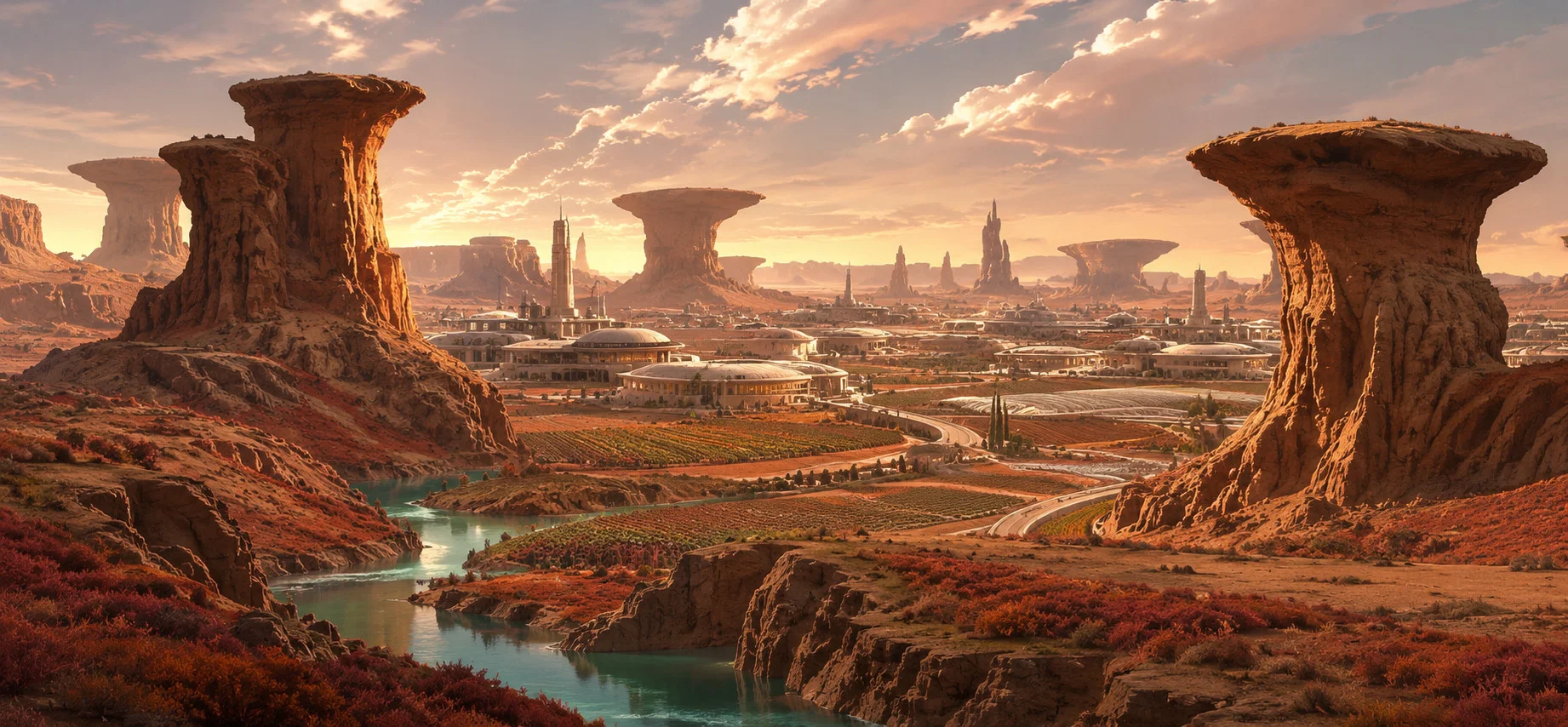
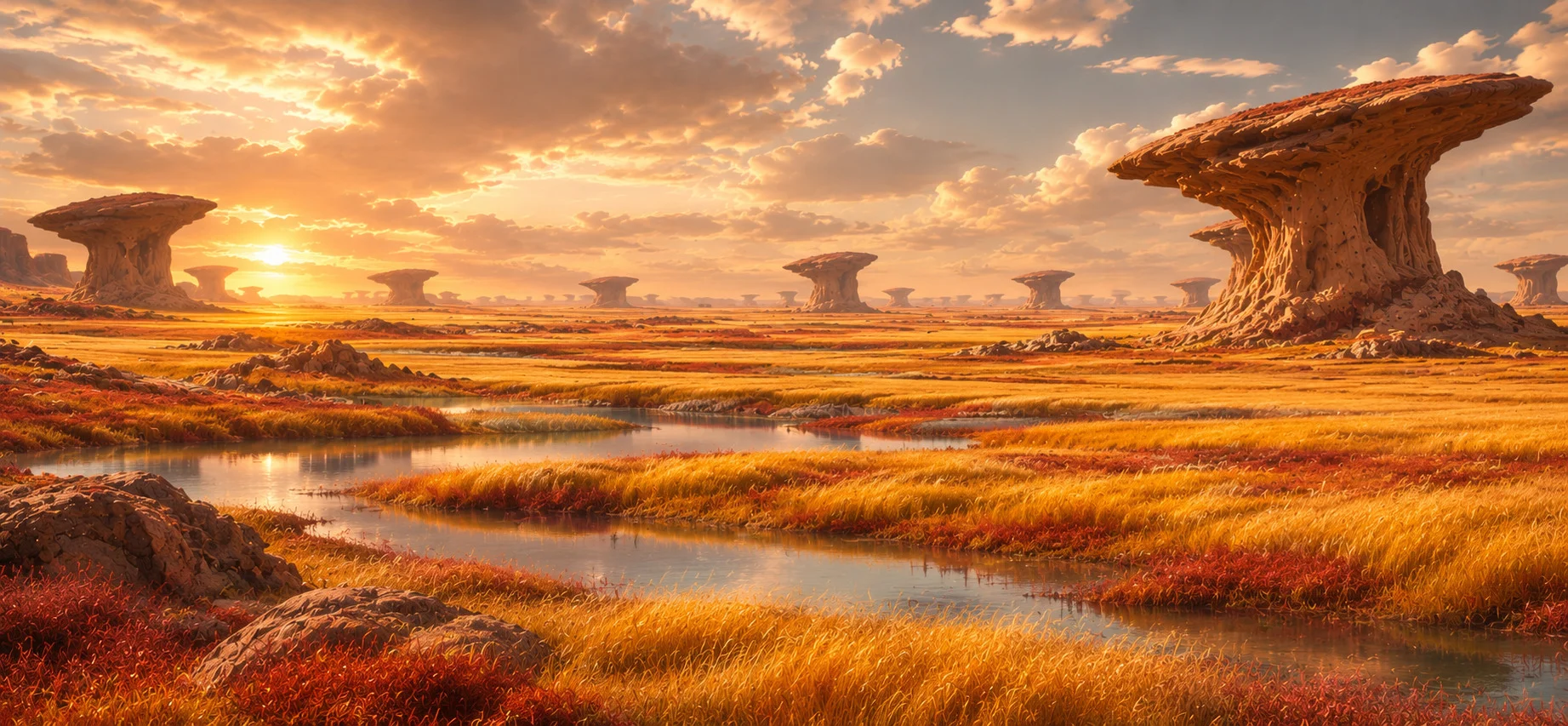
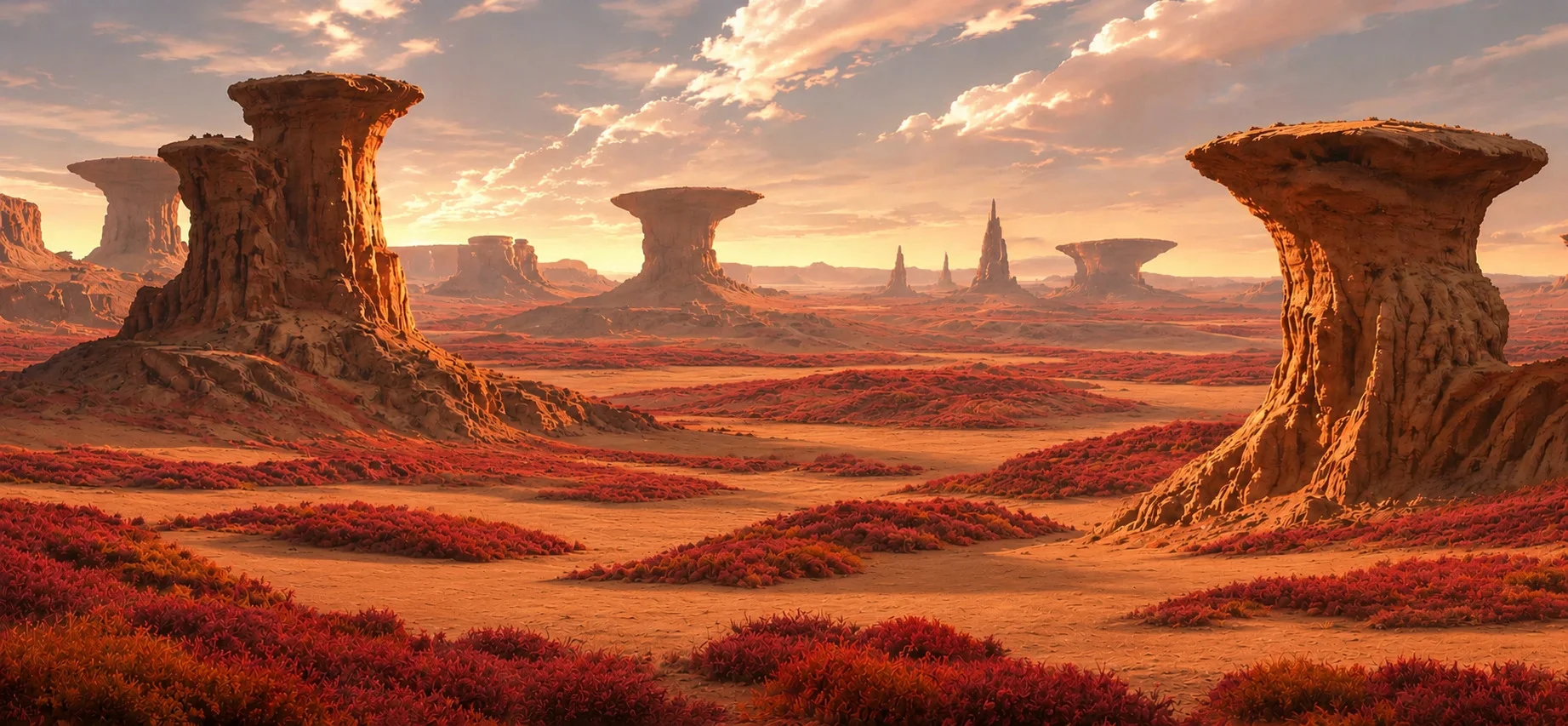
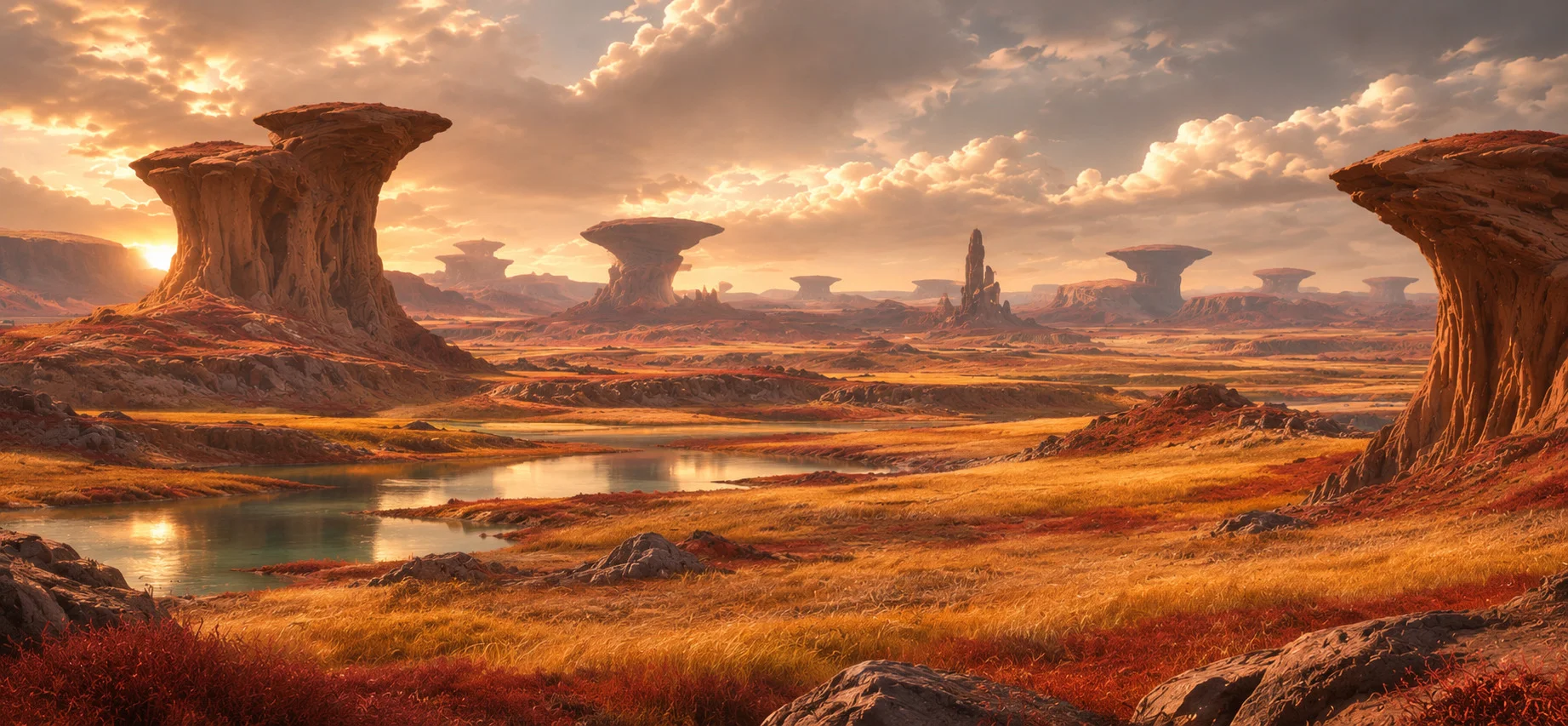
Standing on Monarta’s surface reveals an immense landscape of reddish-brown rock formations, ochre plains and irregular mountain ranges. The terrain is considerably more rugged than it initially appears from orbit, with extensive ridges, eroded valleys and elevated plateaus stretching across the continents.
The inland seas and lakes are among the most distinctive geographical features, displaying unusual turquoise-green waters that contrast with the surrounding reddish terrain. Their shores support considerably more vegetation, including hardy grasses, shrubs and cultivated agricultural regions.
The sky is generally clear, with a pale blue appearance during the day. Occasionally, elongated cloud formations pass overhead, casting enormous shadows across the landscape. Temperatures remain relatively warm, while dry winds frequently travel across the open plains, carrying small amounts of dust.
Human settlements and agricultural installations are concentrated around waterways and fertile valleys. Beyond these inhabited regions, enormous stretches of rugged wilderness remain largely untouched, giving Monarta a vast, open and sparsely populated atmosphere.
Fauna and Flora
Introduced agricultural vegetation, drought-resistant grasses, hardy shrubs, cultivated forests, and imported livestock adapted to dry environments.