Overview
Coran is an arid planet with an atmosphere rich in sulfur compounds that have shaped its geology and the evolution of its native life. Although the atmosphere is irritating and potentially harmful to most galactic species without respiratory protection, the Coronians evolved under these conditions and can breathe the native air without difficulty.
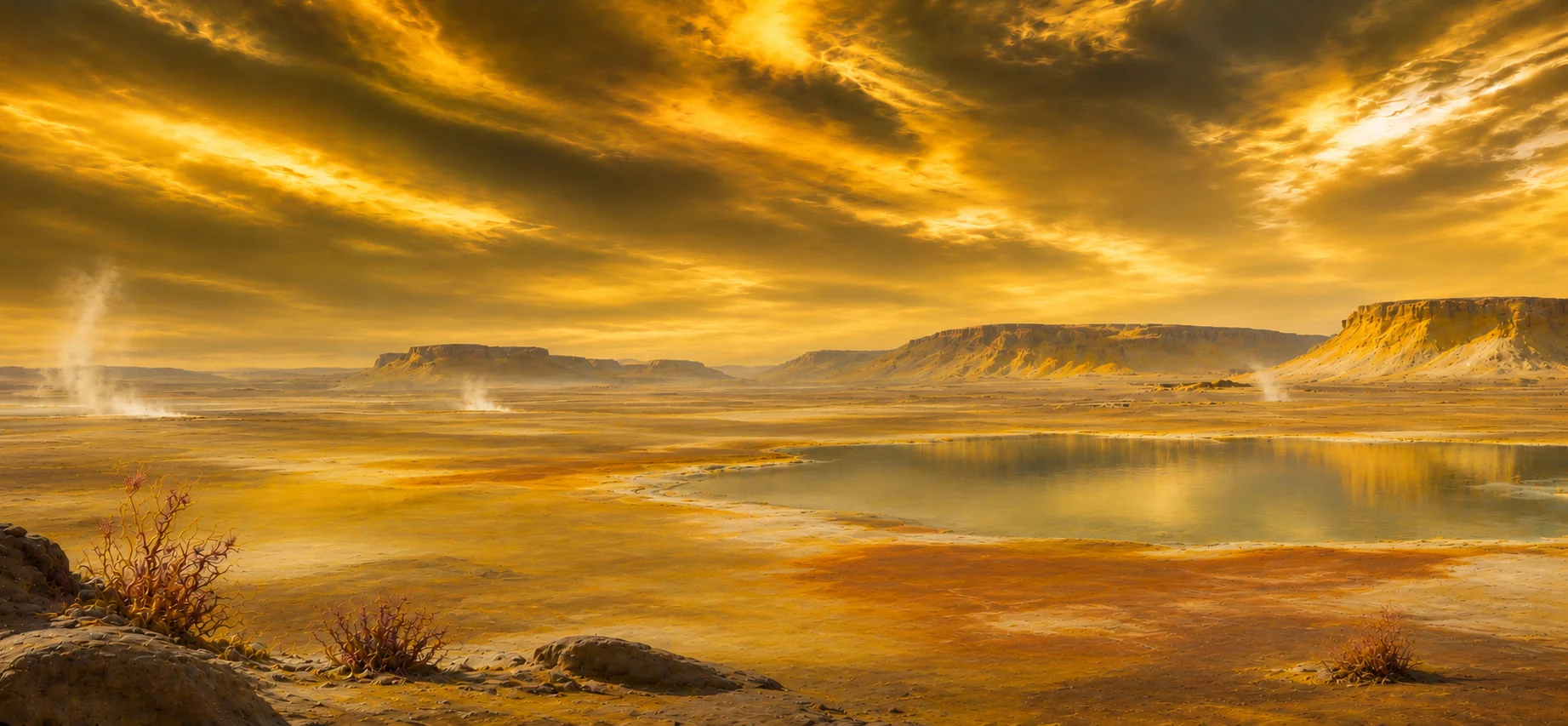
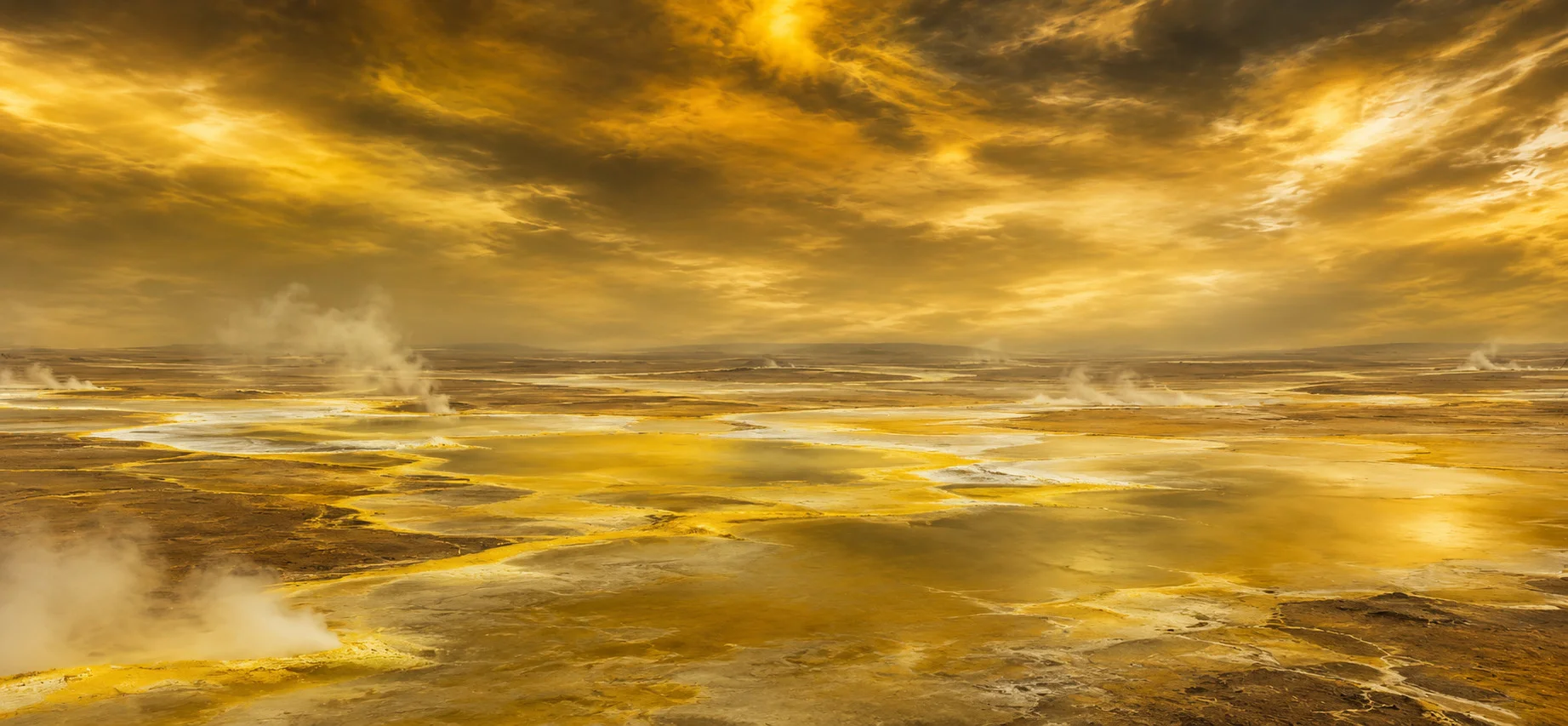
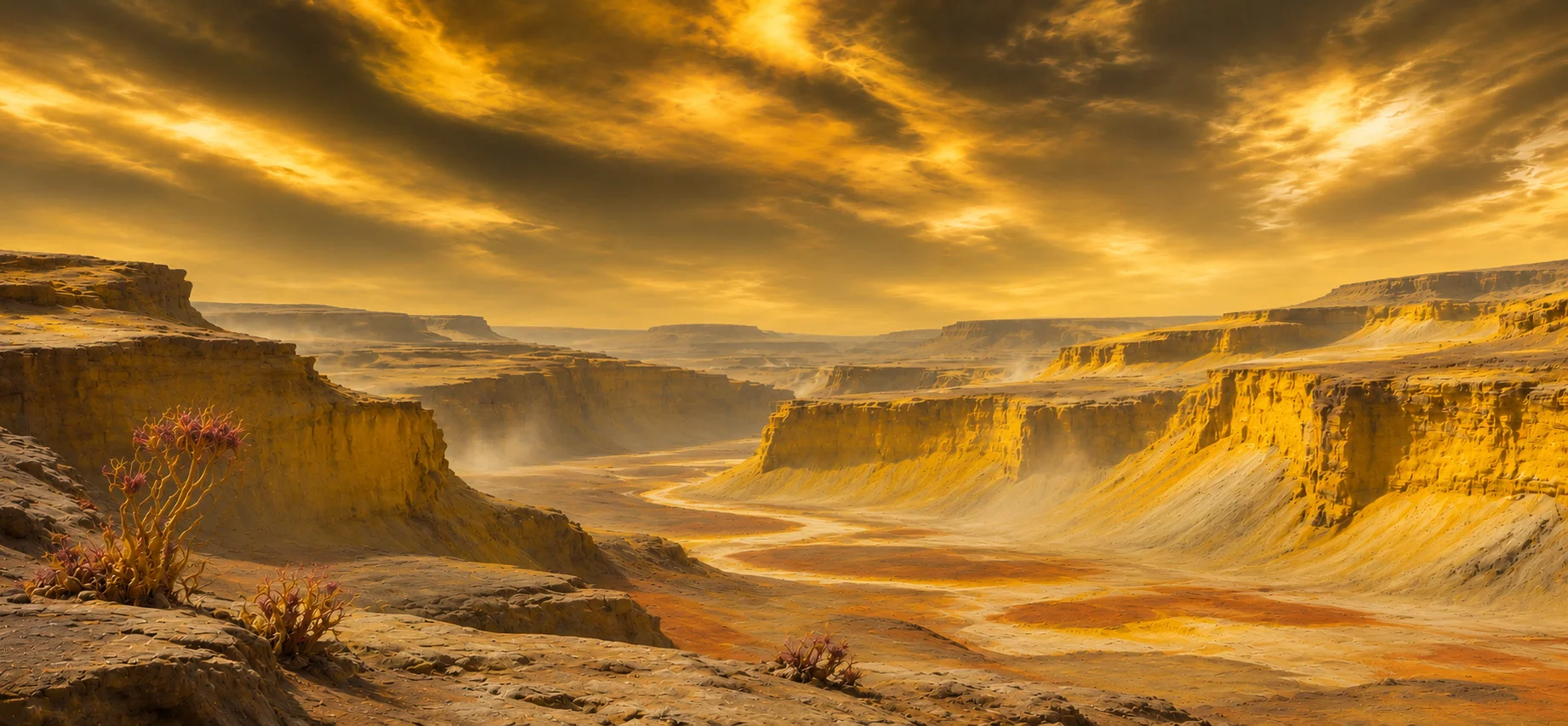
Its surface is dominated by extensive volcanic plains, natural sulfur deposits, eroded canyons, and mineral formations in shades of ochre and yellow. Limited accessible water has made this resource particularly valuable, while the planet’s sulfur-rich materials and chemical industry have established Coran as an important production center within the USF.
The planet’s natural water contains high concentrations of minerals and sulfur compounds. While suitable for the Coronians, it can become toxic to most non-native species after short-term exposure, making imported potable water essential for visitors and immigrant communities.
Planetary View
From orbit, Coran displays a distinctive surface dominated by ochre, mustard yellow, and light brown tones. Vast mineral deposits create irregular patterns across the terrain, contrasting with eroded rock formations and darker volcanic regions. Small bodies of water appear in muted gray-green shades due to their mineral composition.
A thin, golden atmospheric haze softly surrounds the planet without obscuring its surface. Sparse, delicate cream-colored clouds drift across the atmosphere, leaving most of the terrain clearly visible. At night, small clusters of city lights illuminate the planet’s major settlements, standing out against the immense darkness of the surrounding arid landscape.
Surface View
Walking across Coran means traversing a landscape of weathered volcanic rock, ochre-colored sand, and extensive deposits of yellow sulfur. The sky has a subtle golden tint caused by the atmospheric composition, while the light from the planet’s star casts a warm glow across the terrain.
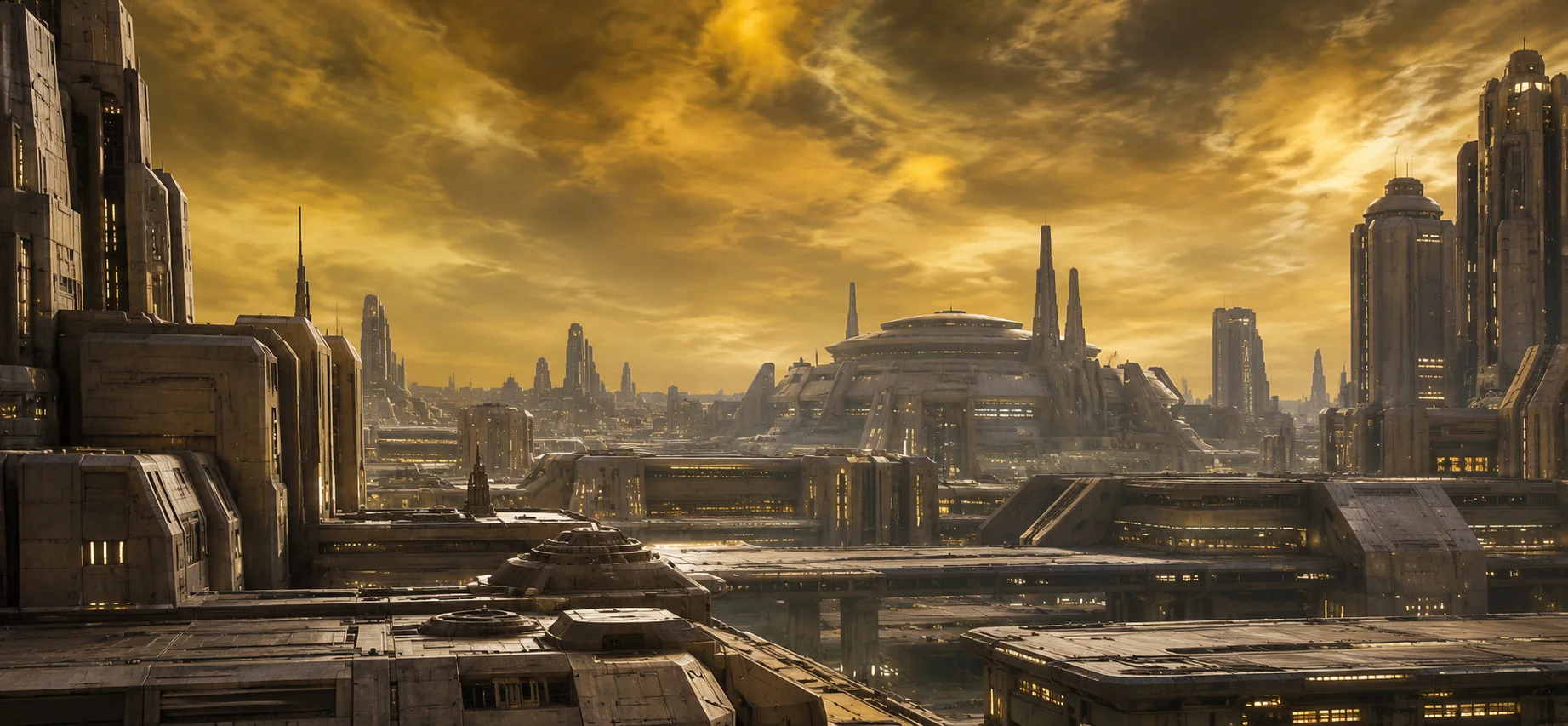
Vegetation is sparse and adapted to extremely dry conditions and sulfur-rich environments. Cities are built near natural water reserves or protected settlements, using volcanic stone and corrosion-resistant materials that blend with the surrounding landscape.
Although the environment is uncomfortable for most visitors, the Coronians live and work there without difficulty. Imported potable water is available in settlements serving foreign residents, travelers, and other species that cannot safely consume the planet’s native water.
Fauna and Flora
Sulfur-resistant xerophytic vegetation and wildlife adapted to arid, sulfur-rich environments.