Overview
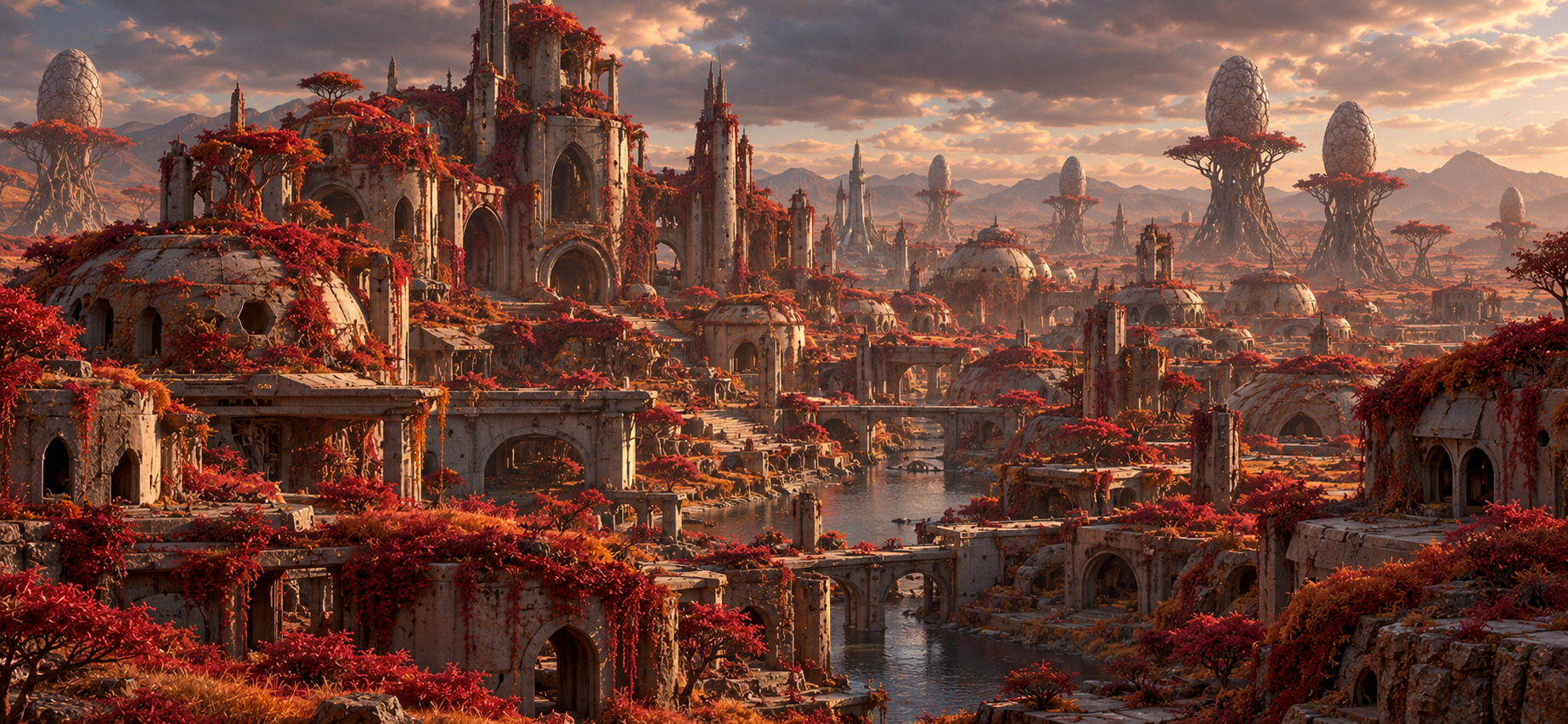
Boti VI remained completely uninhabited for much of its known history. Despite having environmental conditions suitable for life, no civilization managed to maintain a permanent settlement for any significant length of time. The most notable exception was a colony of Antarians, who established a large hive on the surface. After remaining there for too long, the members of the colony began to experience the effects of the moon’s strange resonant anomaly, eventually slaughtering one another until the settlement was completely destroyed.
Since then, Boti VI has been surrounded by superstition. Some explorers claim to hear voices carried by the wind, belonging to deceased relatives, acquaintances, or even themselves. Although no definitive explanation exists for these phenomena, reports from various expeditions describe similar experiences and psychological deterioration.
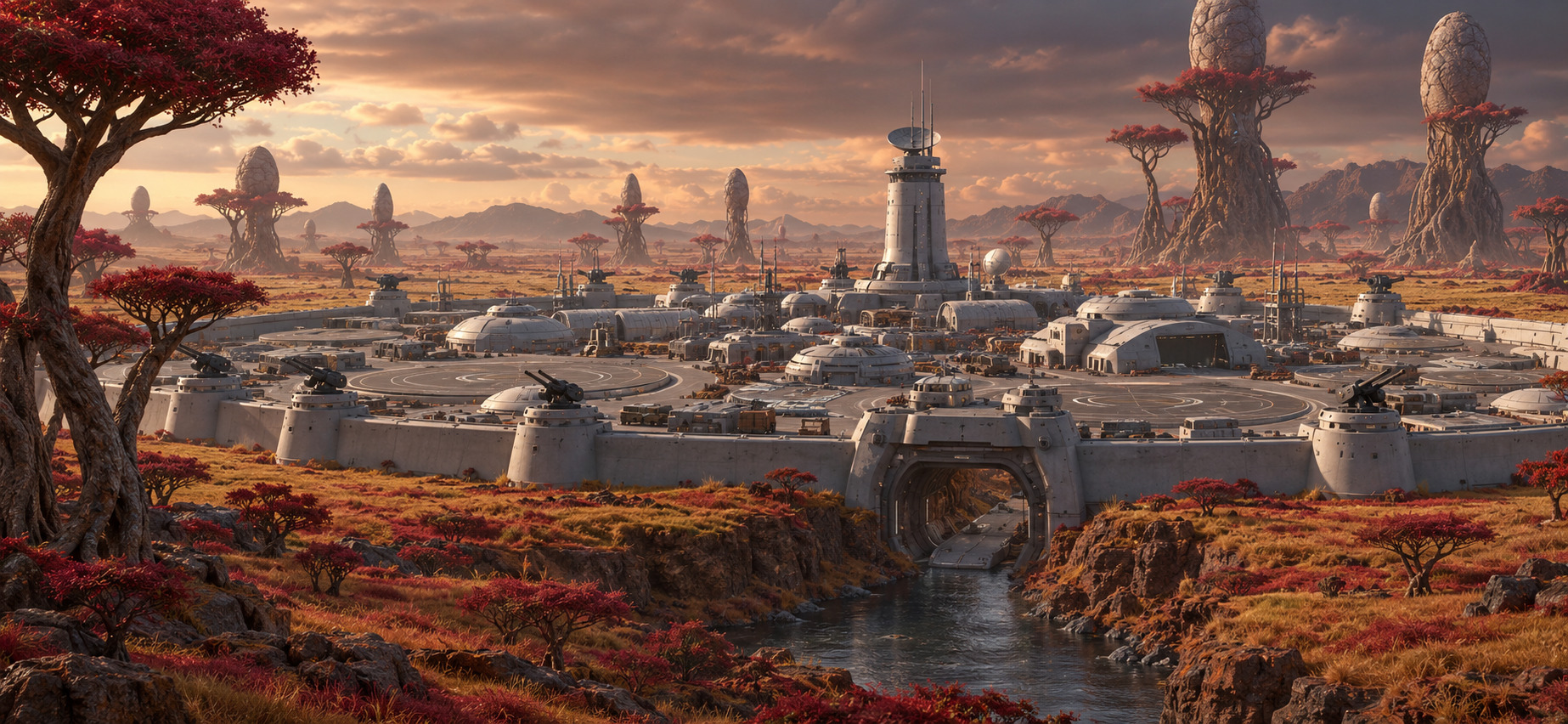
The moon remained uninhabited even during the Great Galactic War. Only after the conflict did the USF decide to establish a permanent military bastion due to its strategic value. To prevent incidents similar to those of the Antarians and other visitors, military personnel rotate periodically from nearby systems, preventing soldiers from remaining exposed to the resonance for too long.
Planetary View
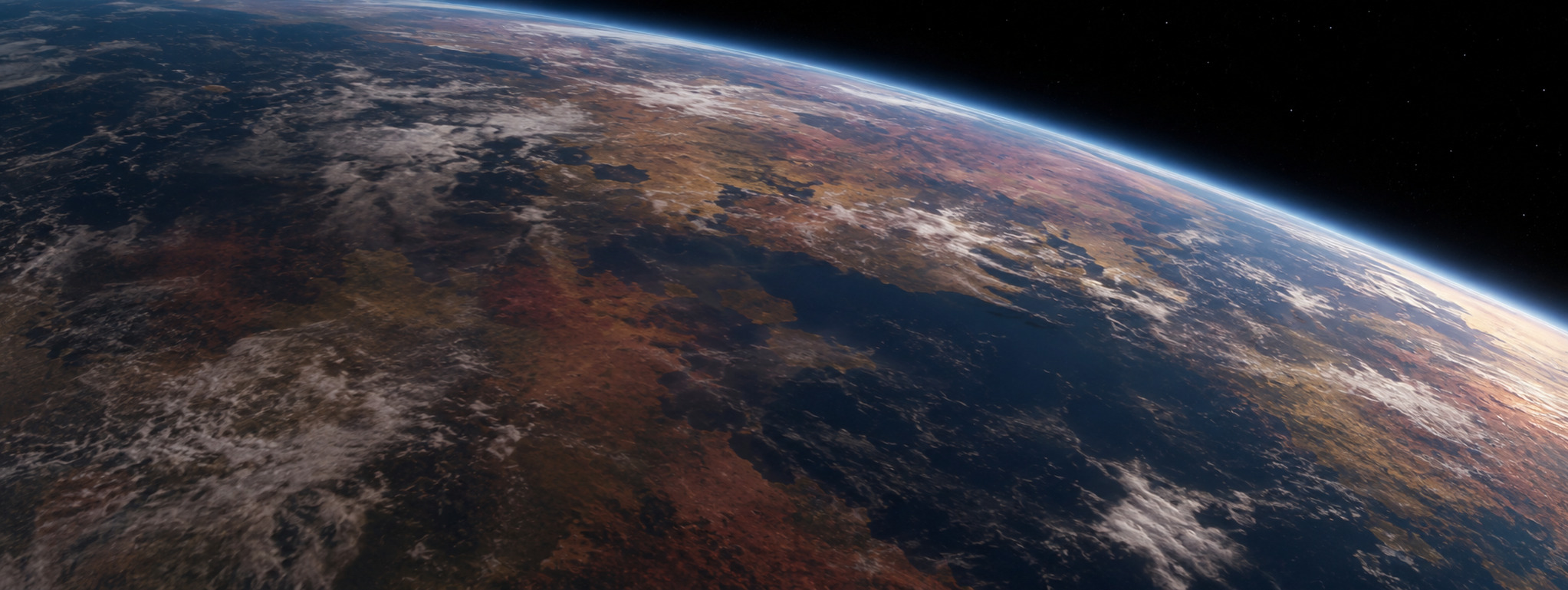
From space, Boti VI displays extensive continents of coppery-pink, brown, and dark yellow shades mixed with copper and pink. Its oceans are an extremely deep indigo blue, close to #0f0e31, contrasting sharply with the landmasses. Large cloud systems cross several regions, and a thin bluish atmosphere outlines its silhouette. Due to orbital distance, the surface appears as a combination of large landmasses, dark oceans, and clouds without clearly distinguishable geographical details. There is no significant urban lighting, except for the faint glow of the USF military bastion.
Surface View
The surface of Boti VI is dominated by plains, forests, and warm-toned rock formations. One of its most recognizable botanical features is the huge red-canopied trees growing around long, narrow plant structures resembling thick vertical stalks, crowned by a large elongated bulb. These structures appear scattered throughout the forests as a characteristic part of the moon’s landscape.
The sky usually displays warm tones between orange, copper, and dull yellow, while wind constantly sweeps through the vegetation. Far from the bastion, the silence is broken only by wildlife, the movement of trees, and hard-to-identify sounds that seem to arise from the wind itself. Ruins of the ancient Antarian hive remain hidden among forest regions, while USF facilities represent the only major modern infrastructure.
Fauna and Flora
No known intelligent native species exist; the moon hosts indigenous wildlife and characteristic flora featuring red-canopied trees with elongated bulbous plant structures.