Overview
Miranta II is a small oceanic planet located in the Miranta System, a stable stellar cluster characterized by a quiet red dwarf star and a series of mineral-rich planetary bodies. Its surface is predominantly covered by vast turquoise oceans, interrupted by irregular landmasses and extensive coastal formations. The planet’s most distinctive geological feature is its enormous basalt columns, created during an ancient period of intense volcanic activity. These formations rise from the surrounding waters, creating natural archipelagos, elevated plateaus, and immense coastal cliffs. Although its surface is no longer volcanically active on a significant scale, internal geothermal activity continues beneath the ocean floor, supporting extensive hydrothermal systems and diverse marine ecosystems. Its climate is generally mild and humid, with frequent rainfall and relatively gentle oceanic winds. Despite its natural resources and favorable conditions, Miranta II remains relatively sparsely populated, with most of its territory and oceanic environments still untouched by large-scale development.
Planetary View
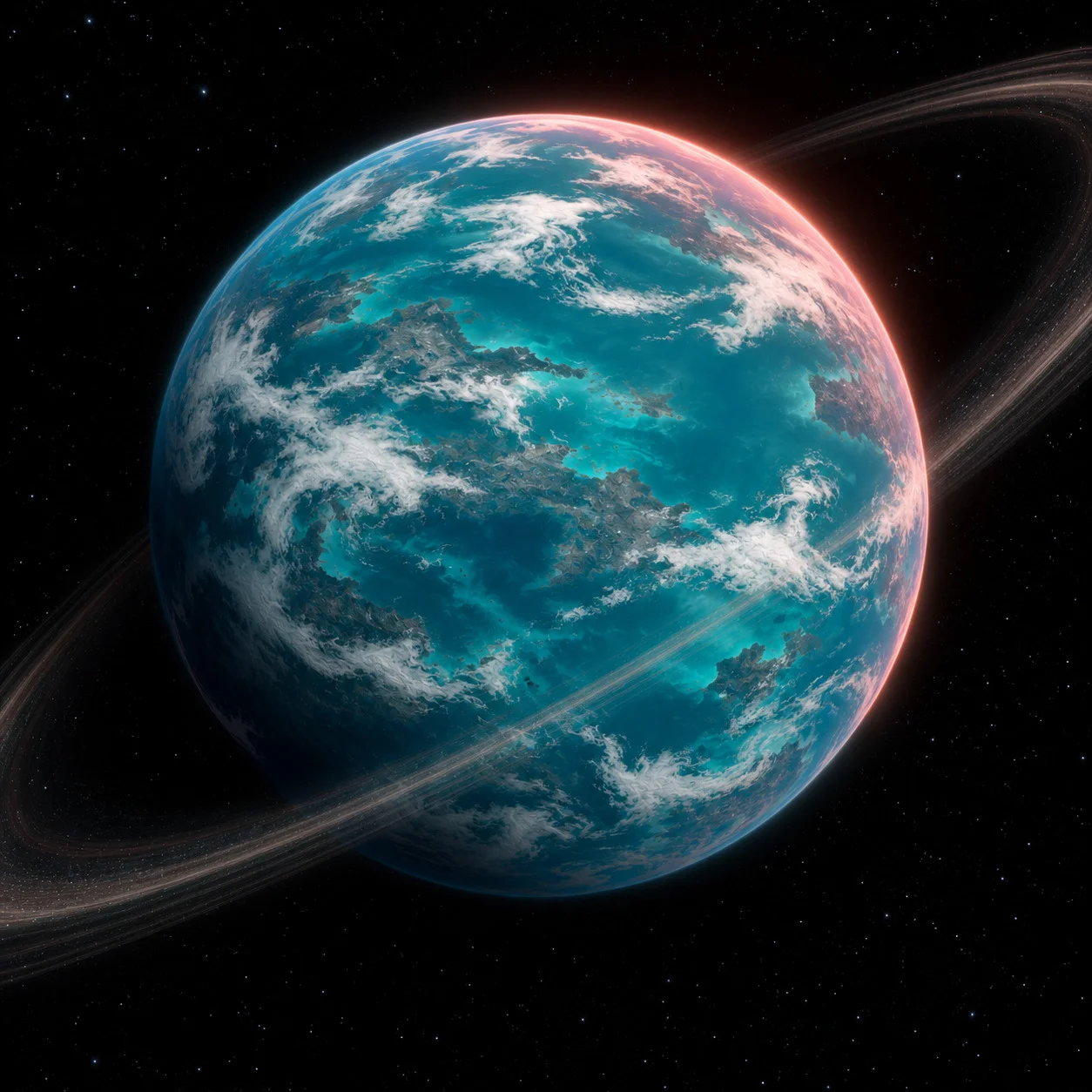
From space, Miranta II appears as a predominantly turquoise-blue world, with irregular dark gray and muted green landmasses scattered across its surface. Its oceans display varying shades of turquoise, teal, and deep blue, creating a striking contrast against the darker coastal regions. Extensive white cloud formations drift across the atmosphere, occasionally revealing large portions of the planet’s surface.
The planet is illuminated by its red dwarf star, giving its atmosphere and sunlit regions a subtle warm reddish tint, particularly along the edges of its clouds and the illuminated horizon. Its natural colors remain predominantly cool, with the turquoise oceans providing the planet’s most recognizable visual characteristic.
A delicate, relatively faint ring system surrounds the planet. Composed primarily of fine rocky and icy particles, the rings are subtle rather than exceptionally bright or dense, appearing as thin, elegant bands against the darkness of space. The entire planetary disk remains clearly visible, with its complete circumference distinguishable from the surrounding rings.
Surface View
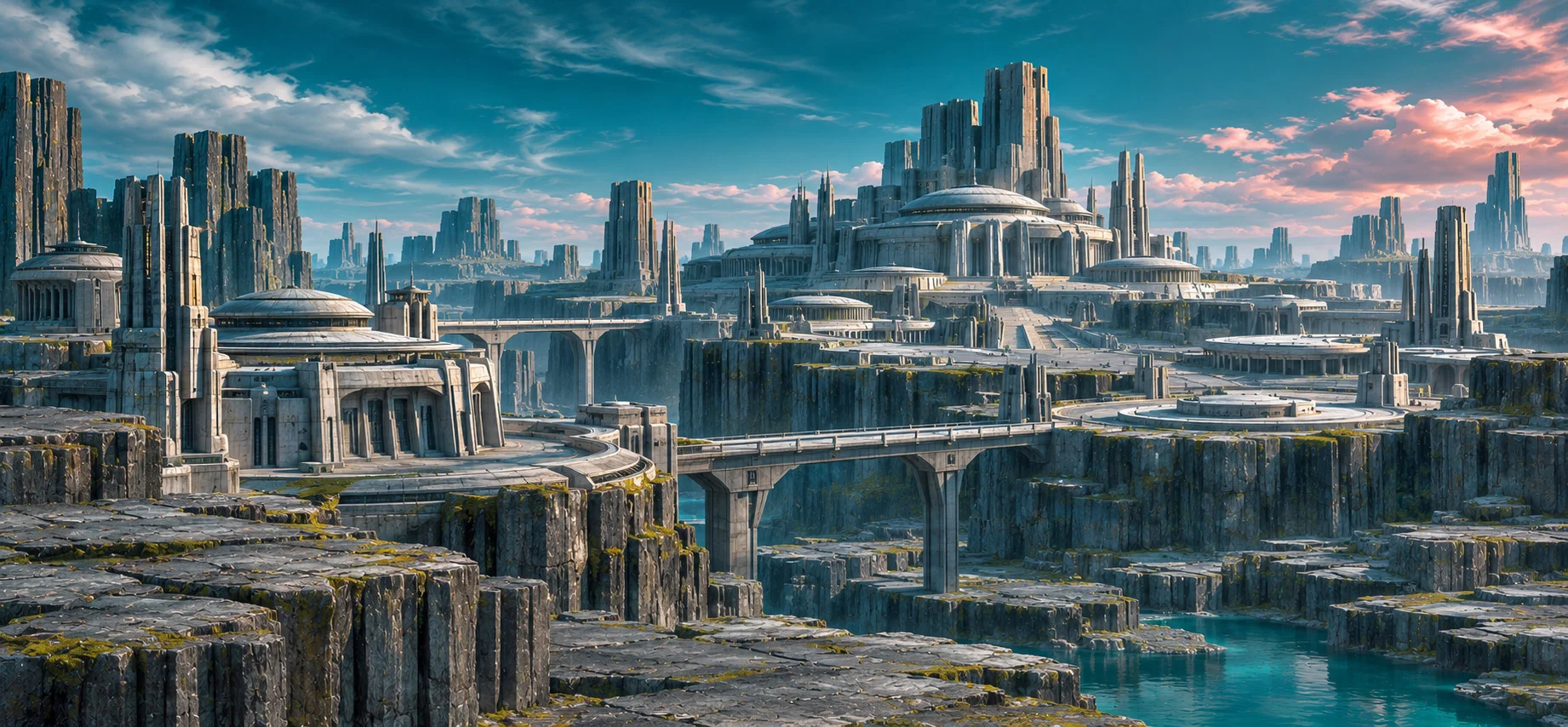
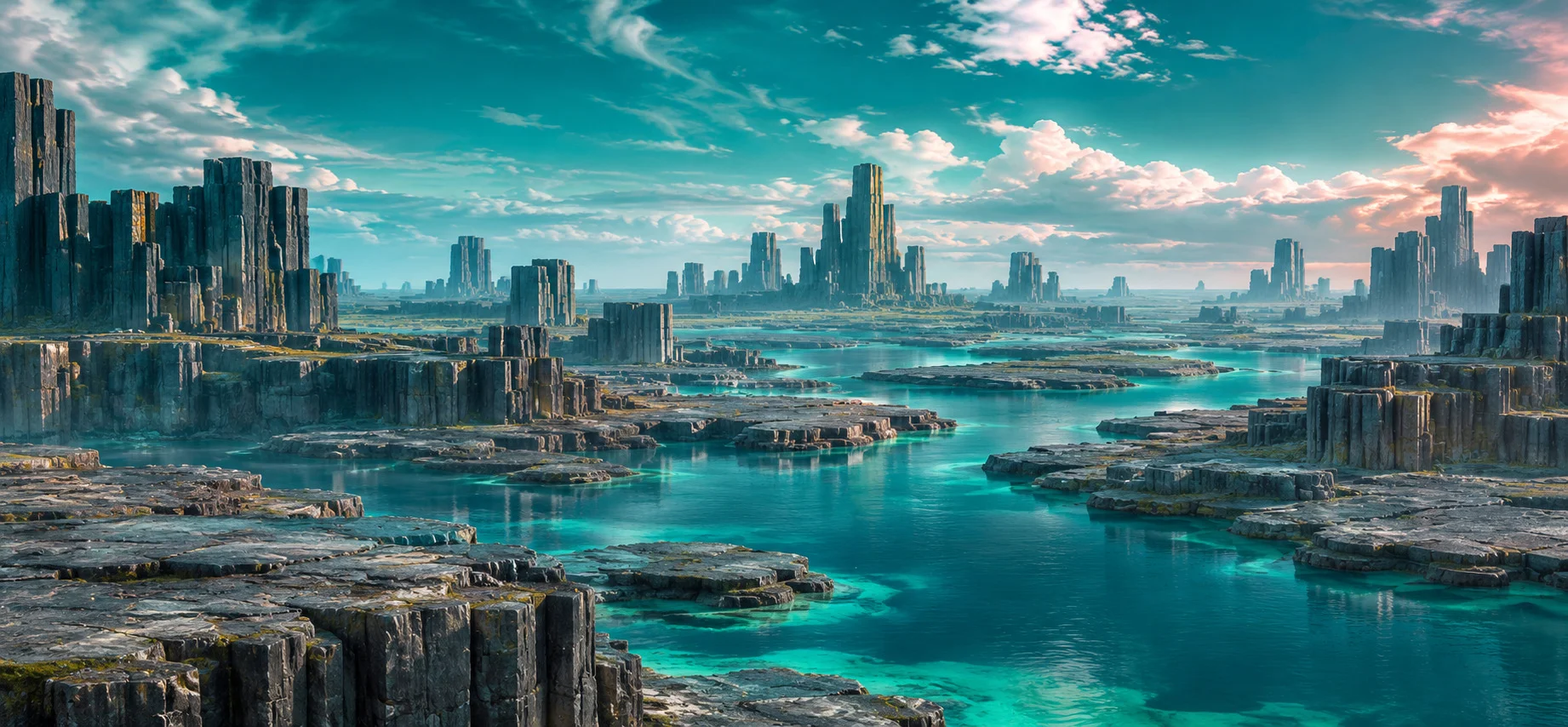
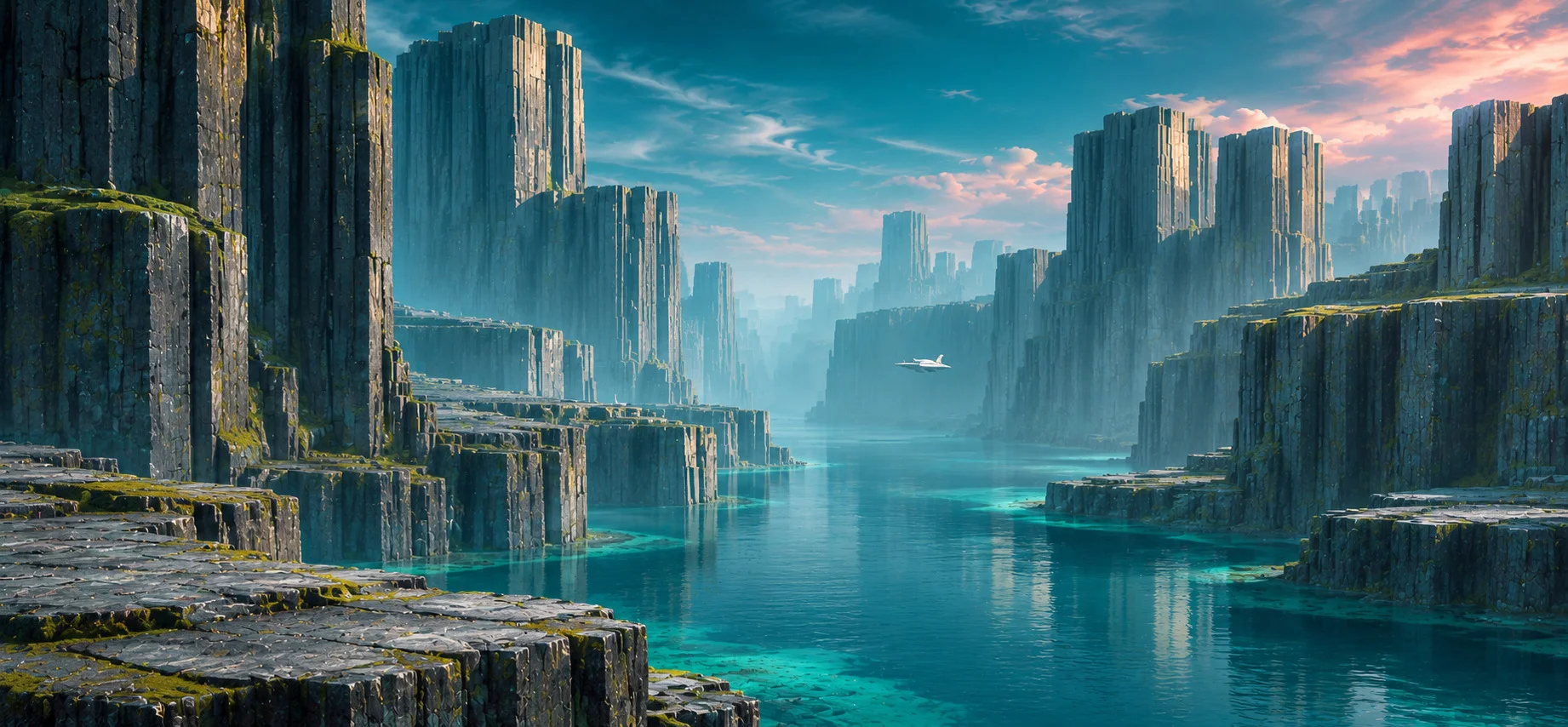
Standing on Miranta II, the landscape is dominated by immense basalt formations rising above turquoise waters. Thousands of naturally formed hexagonal columns create enormous cliffs, elevated platforms, and irregular coastal walls. Some formations extend directly into the ocean, producing narrow waterways, sheltered lagoons, and natural channels between the rocky structures.
The sky generally appears pale blue with a slight greenish tint, while the light from the red dwarf star gives the environment a subtle warm coloration, especially during sunrise and sunset. White clouds frequently move across the horizon, and rainfall is common in coastal regions.
Vegetation grows along the upper surfaces of the basalt formations and within the natural cracks between the columns. Waterfalls descend from elevated plateaus into the surrounding ocean, while marine life can frequently be observed in the exceptionally clear coastal waters.
The few inhabited areas are carefully integrated into the natural landscape, with settlements built upon elevated basalt platforms and connected through bridges, coastal roads, and navigable channels. Much of the planet remains untouched, preserving its distinctive geological formations and natural ecosystems.
Fauna and Flora
Coastal forests, giant marine algae, stone corals, bioluminescent fish, seabirds, and large amphibious reptiles.


 EN