Overview
Barana IV is the fourth planet in the Brana System, many call it the second Danon and is one of the economic pillars of the USF. Despite its population of billions, it is far from being an ecumenopolis. Its surface remains dominated by vast tundras, cold deserts, mountain ranges, and frozen plains, while enormous cities are concentrated in the regions most suitable for development.
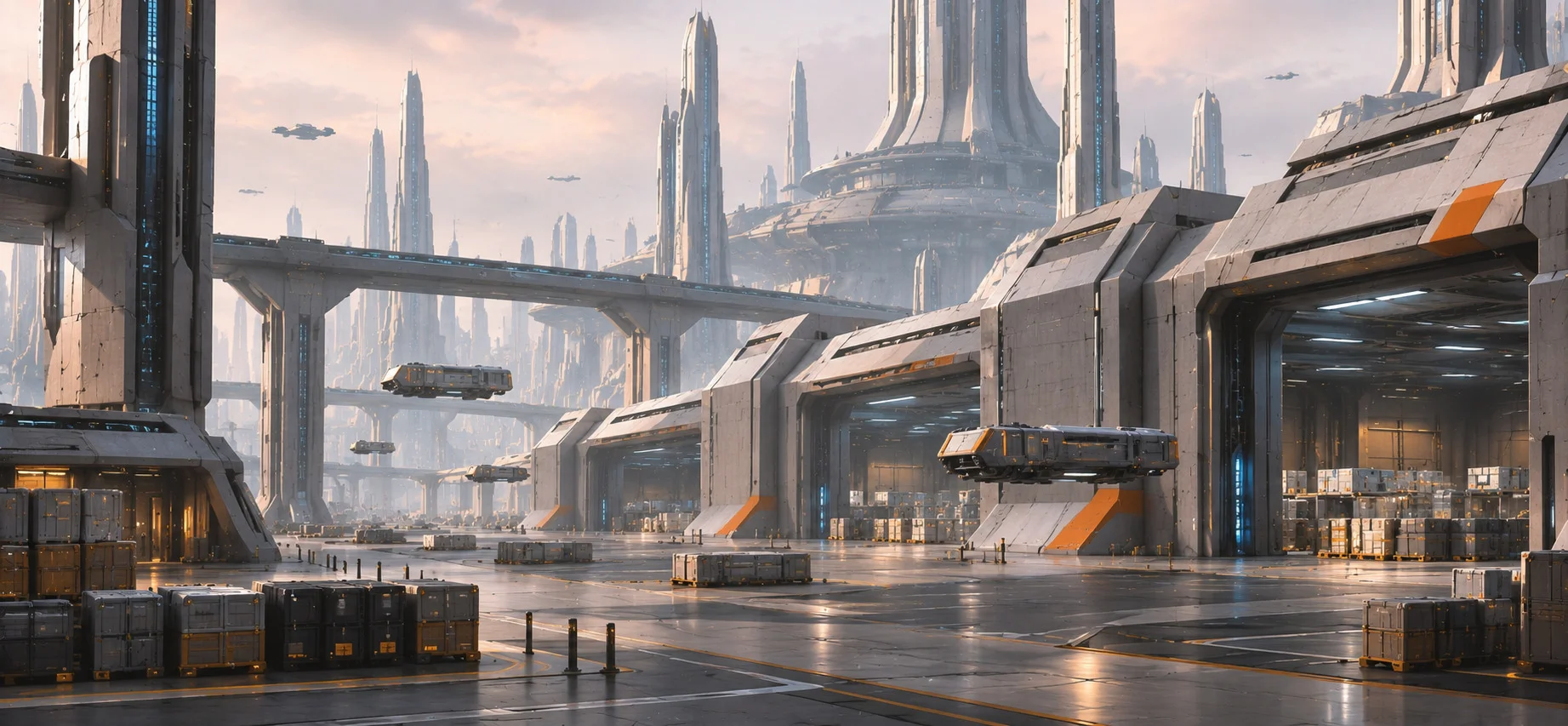
Its economy revolves around heavy industry, advanced manufacturing, civilian spacecraft construction, interstellar trade, financial services, and scientific research. Its orbital ports receive a constant stream of cargo ships and transports from across the region, making it one of the USF’s major logistical hubs. Despite its extensive urbanization, the planet retains vast stretches of largely untouched wilderness, where ice, rock, and cold deserts dominate the landscape.
Planetary View
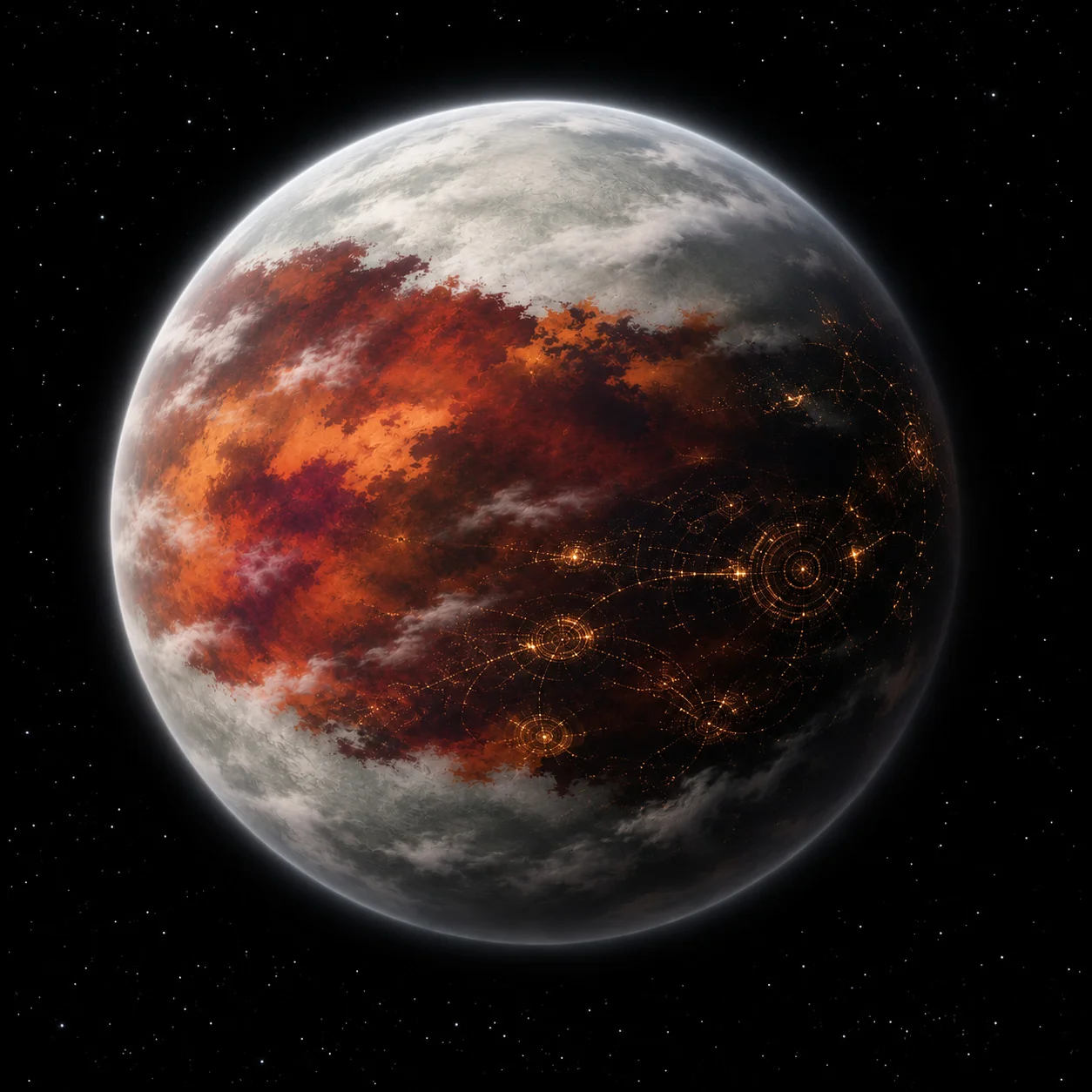
From orbit, Barana IV displays a predominantly white, gray, and pale beige surface covered in ice, rock, and vast arid plains. An immense, irregular belt of dark red, rust-brown, and orange terrain stretches across much of the planet, marking its most heavily industrialized and urbanized regions. These areas form a colossal network of interconnected metropolitan zones, creating a striking contrast against the pale, barren landscapes surrounding them.
Oceans are scarce and relatively small, appearing as isolated dark-blue inland seas and lakes scattered across the continents. Thin clouds drift through the atmosphere, while the planet’s reduced polar ice caps blend into the surrounding terrain. The overall appearance is that of a cold, dry world shaped by extensive industrial development.
Surface View
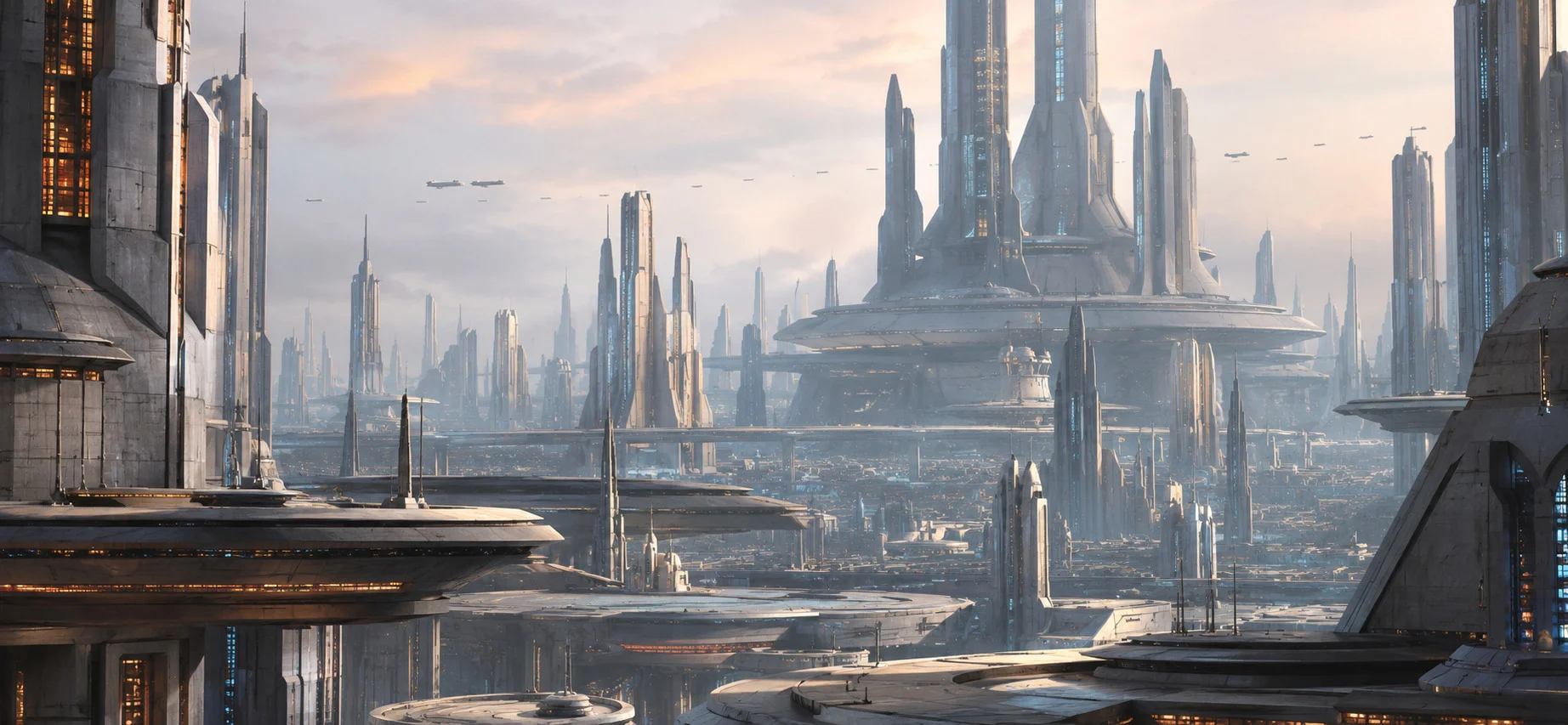
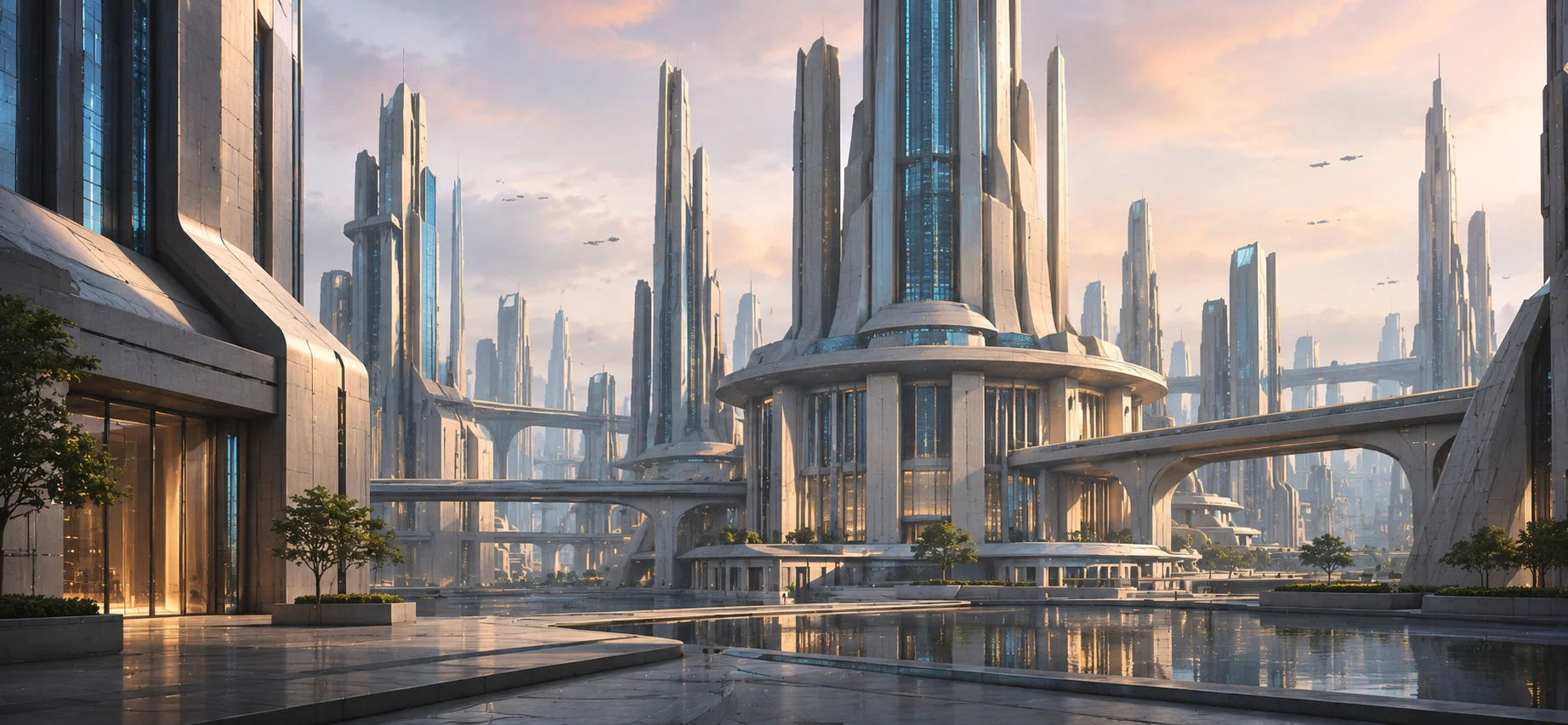
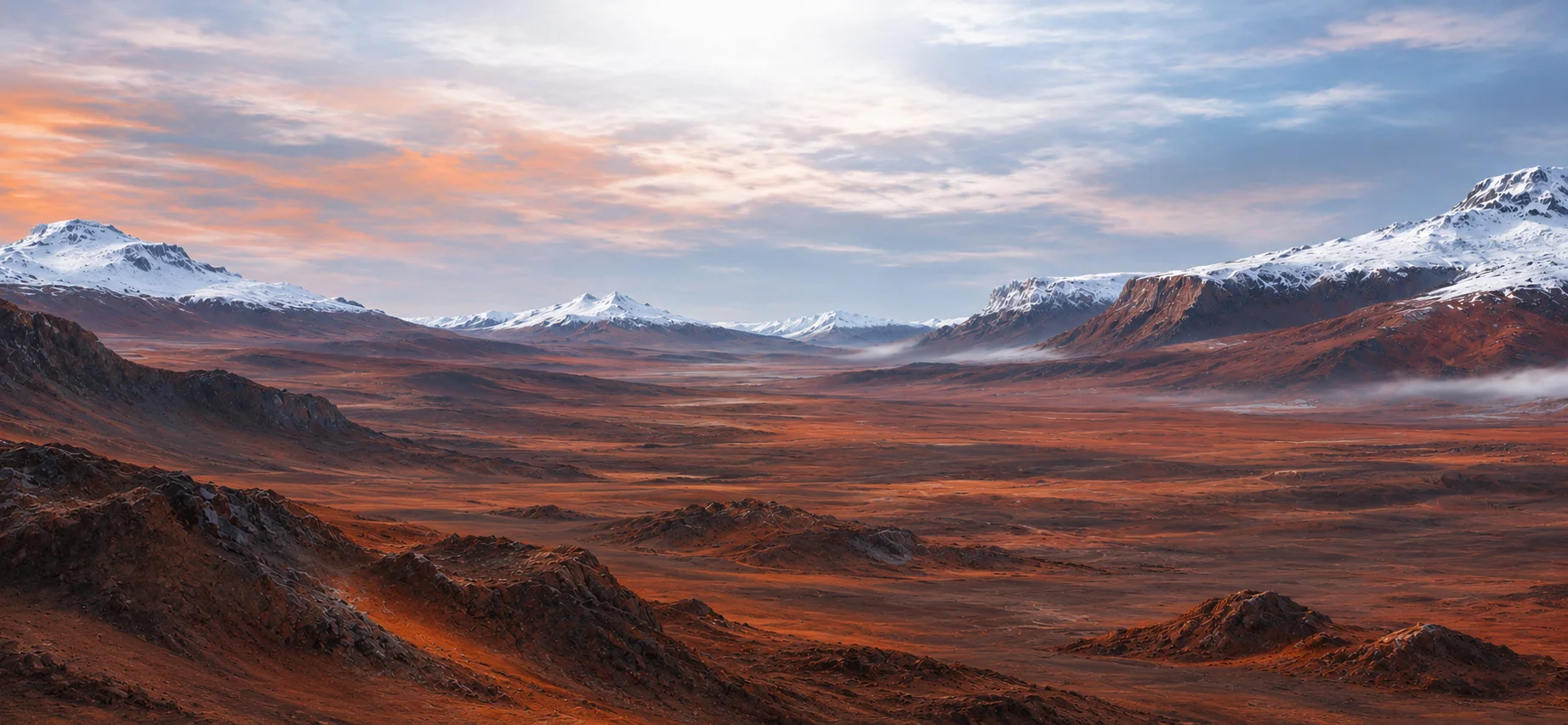
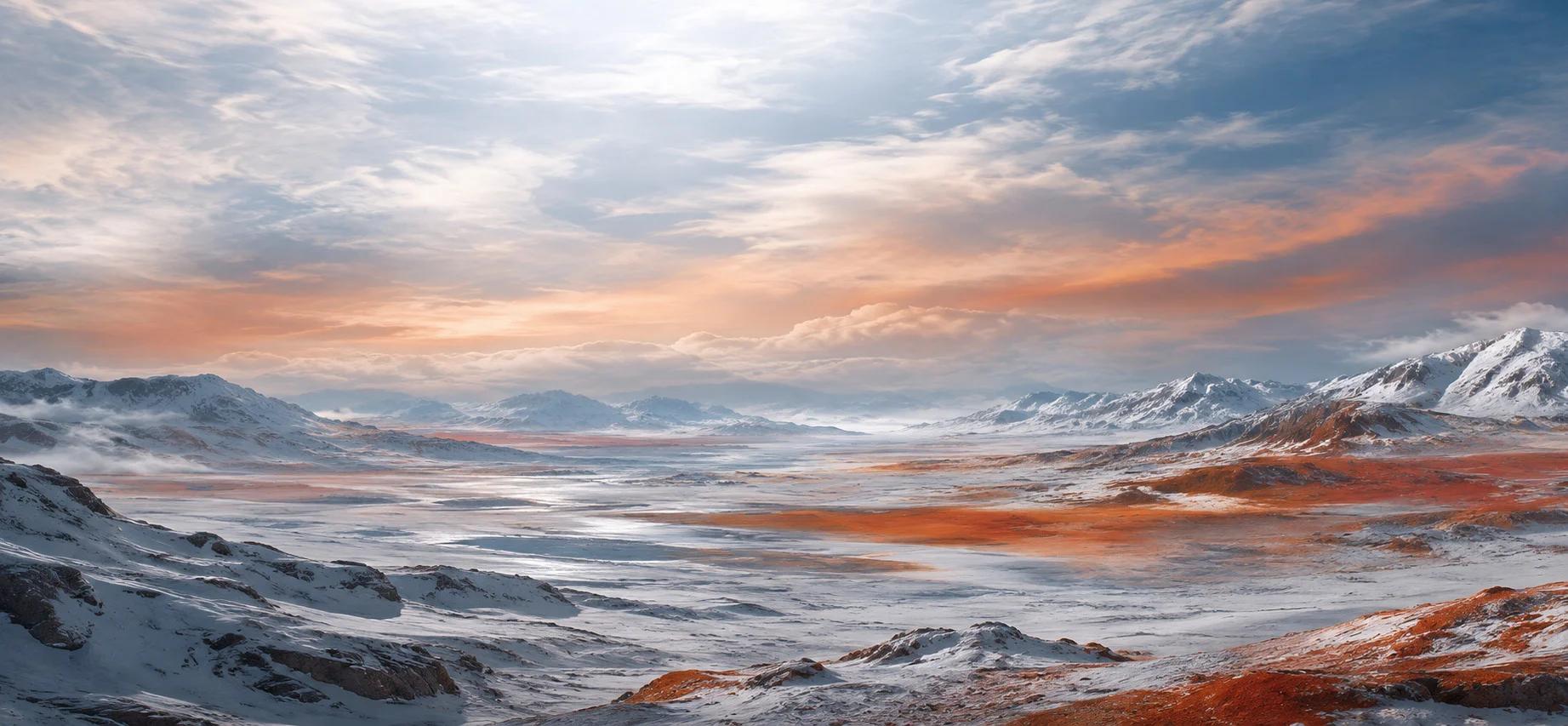
The surface is dominated by frozen plains, weathered mountain ranges, rocky cold deserts, and scattered inland lakes that remain partially frozen for much of the year. Its immense cities rise in clusters of steel, glass, and reinforced concrete, connected by magnetic-levitation railways, multilayered highways, and busy networks of antigravity vehicles.
Industrial facilities, technological complexes, and agricultural districts protected by climate-controlled domes occupy the spaces between metropolitan areas. The sky is often pale blue or gray beneath the warm, muted light of the system’s K-class star, while cold, dry winds sweep across the open plains. At night, millions of lights illuminate the urban horizons, contrasting with the vast darkness of the planet’s uninhabited regions.
Fauna and Flora
Cold-resistant mosses, lichens, hardy shrubs, isolated boreal forests, small herbivores, migratory birds, and wildlife adapted to polar climates.