Overview
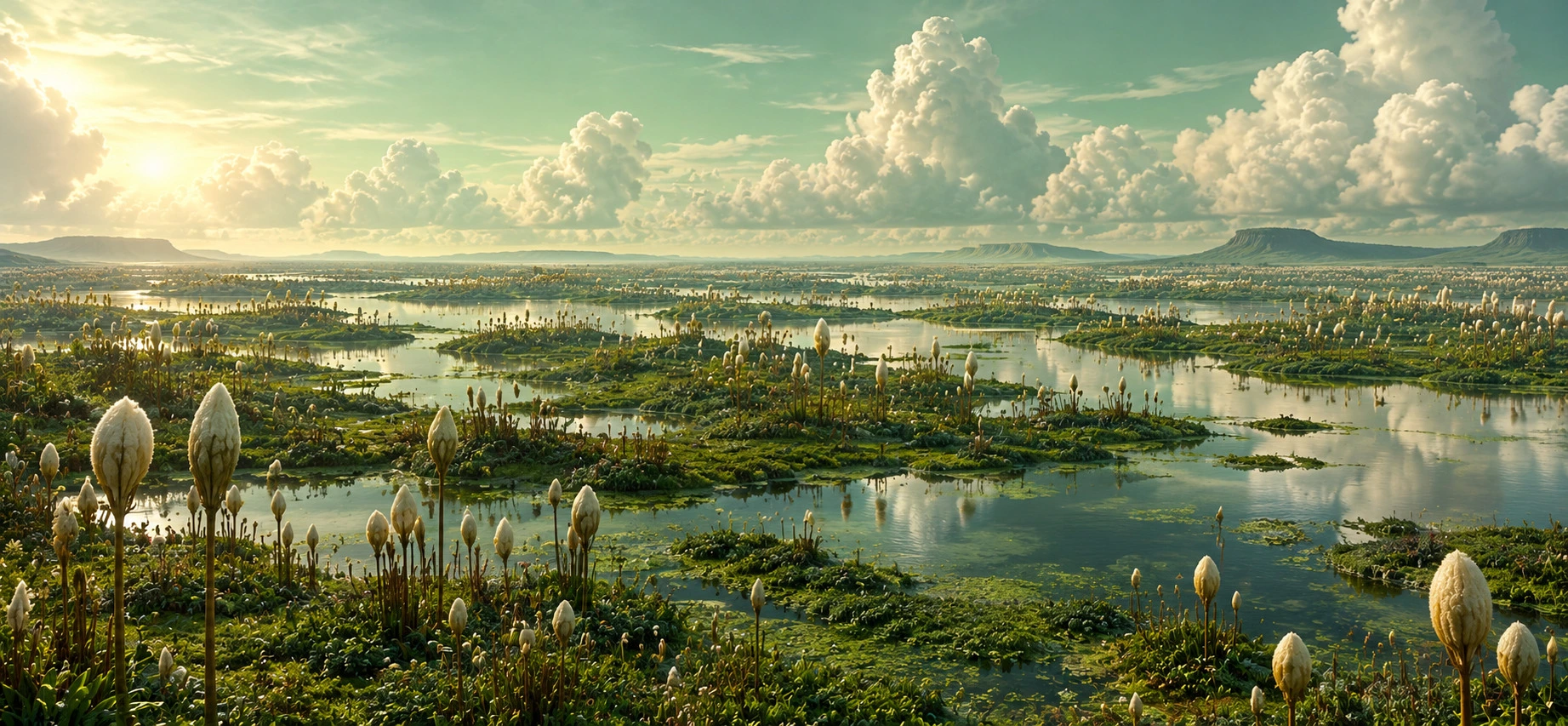
Sentine is a world dominated by swamps, wetlands, shallow lakes, and extensive inland waters. Its humid environment and naturally warm waters support a thriving ecosystem, with enormous algae blooms covering millions of lakes and waterways across the planet.
The most valuable organism on Sentine is the Sentine Algae, an edible aquatic species with exceptionally high nutritional value for numerous galactic species. These algae constitute the planet’s primary food source and its most important export. Sentine is the galaxy’s largest exporter of this resource, supplying food markets across numerous inhabited systems.
The algae are an essential component of the planet’s ecological balance. They sustain local food chains, contribute to oxygen production, and support the biodiversity found throughout the wetlands. Their abundance has also allowed Sentine to develop a specialized food-production industry without extensively transforming its natural environment.
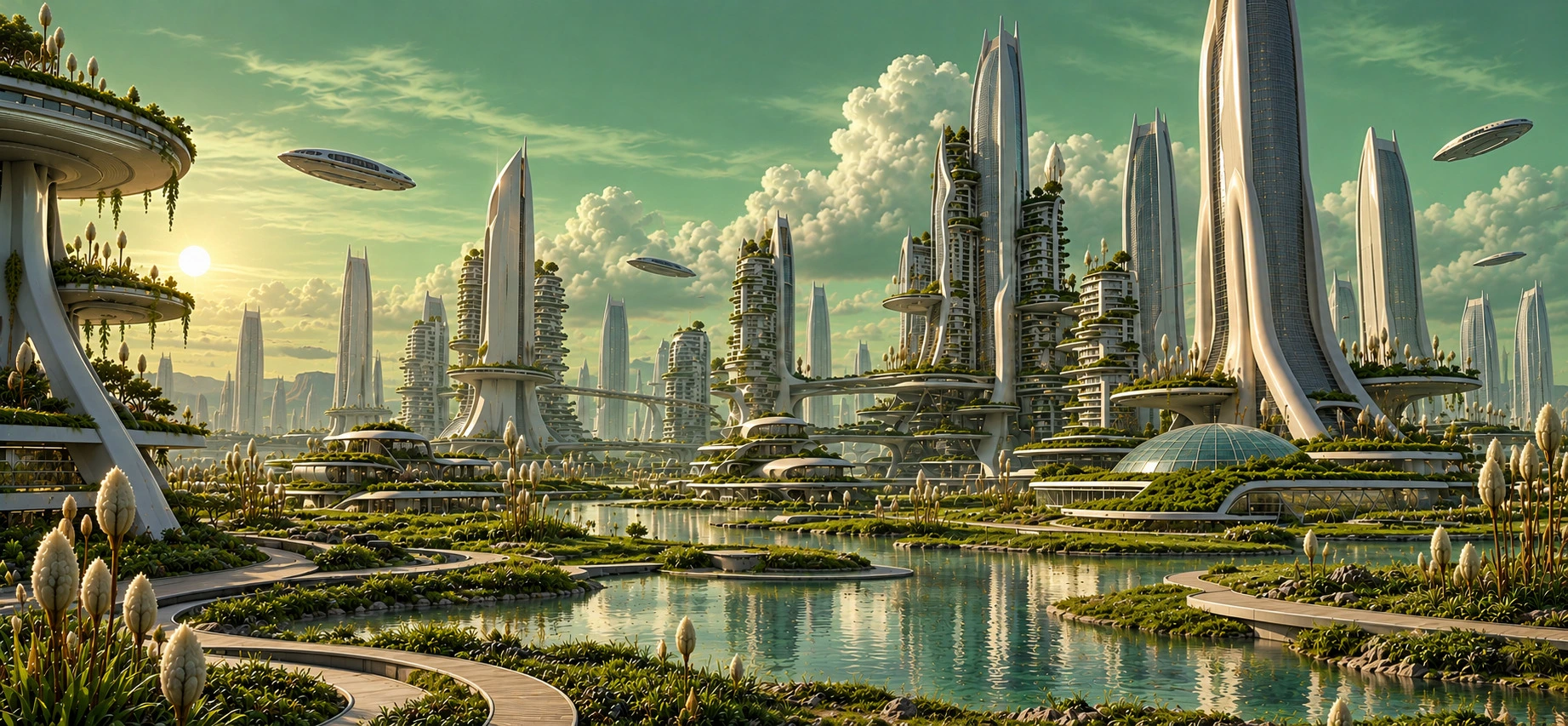
The planet’s mineral-rich soil helps retain heat, keeping its lakes warm throughout the year and maintaining a relatively stable, humid climate. Its settlements are designed to coexist with the surrounding wetlands, combining modern architecture with canals, elevated walkways, botanical areas, and protected natural reserves.
With a population of approximately 850 million inhabitants, Sentine remains comparatively sparsely populated across its extensive surface. Most settlements are concentrated around waterways, agricultural areas, and major algae-processing facilities, leaving vast regions of wetlands and natural habitats largely undisturbed.
Planetary View
From space, Sentine appears as a predominantly green world, with emerald, olive, and dark green hues covering its continents. Vast wetlands, shallow lakes, winding rivers, and inland seas create intricate patterns across the surface.
The widespread presence of Sentine Algae gives many bodies of water their distinctive green coloration. Some regions appear almost entirely covered by dark green aquatic growth, while others display contrasting patches of open water and lighter vegetation.
Broad cloud formations drift across the planet, with particularly dense white clouds forming over its humid regions. These clouds occasionally develop into large spirals and elongated bands that contrast with the green surface below.
Sentine has relatively small polar ice caps and no planetary rings. From orbit, its natural landscapes dominate the view, while the lights of its cities appear as scattered clusters on the night side rather than as continuous illuminated regions.
Surface View
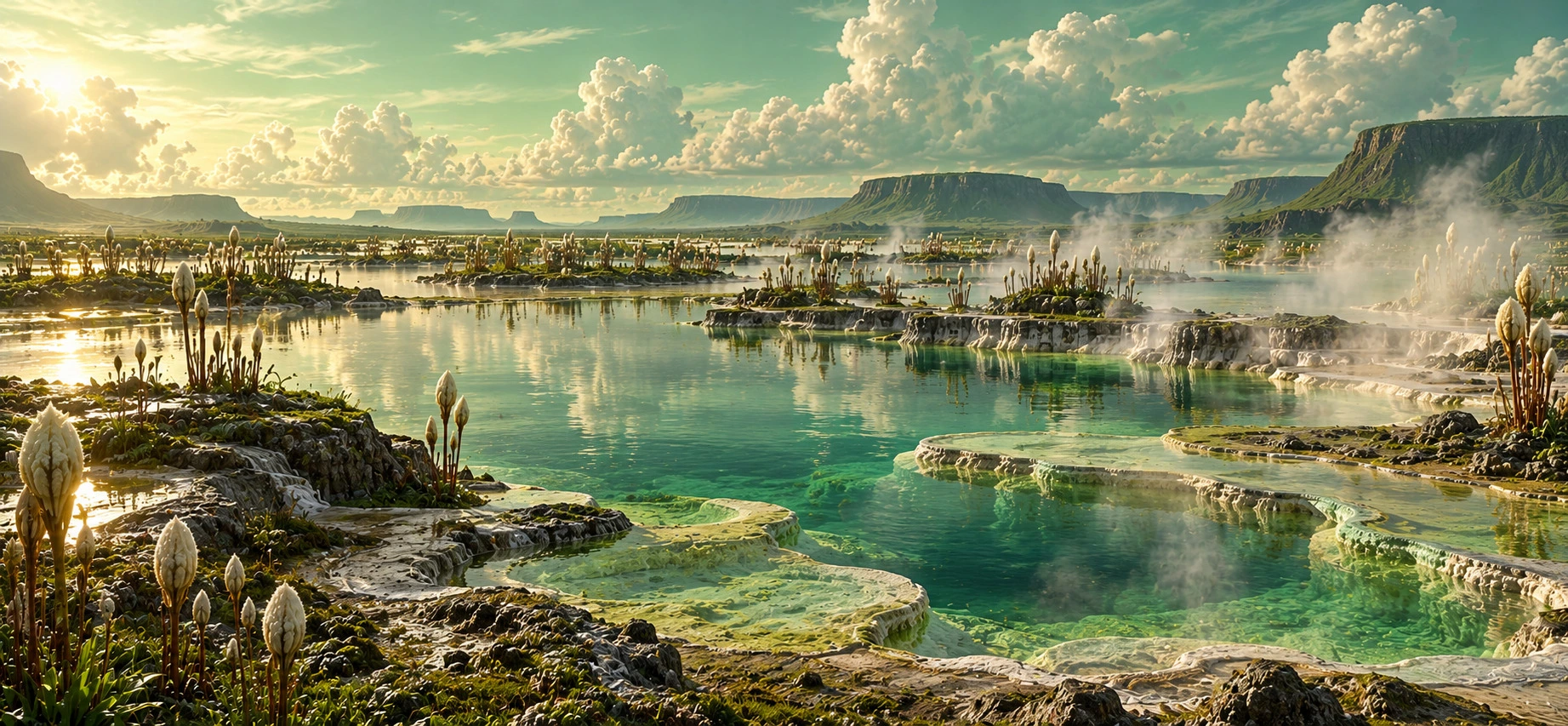
Sentine’s surface is characterized by warm wetlands, shallow lagoons, damp plains, and winding waterways. The atmosphere is humid, and the sky has a distinctive greenish hue that gives the landscape an unusual appearance.
There are no trees on Sentine. Instead, its most recognizable plant species is a tall plant with a slender stem and a large, pale, bulb-shaped growth at the top. These plants are distributed across virtually the entire planet, growing throughout the wetlands and open plains. Their prominent bulbous crowns make them the defining feature of Sentine’s natural vegetation.
The rest of the flora consists of small plants, mosses, reeds, low-growing vegetation, and aquatic species concentrated along the shores of lakes and rivers. The Sentine Algae are particularly abundant in the planet’s waterways, where they form extensive green blooms and provide a vital source of nutrition.
Cities feature elegant structures with curved designs, elevated walkways, canals, and open public spaces. Buildings are integrated into the wetland environment, with carefully managed waterways connecting residential areas, commercial districts, and algae-processing facilities.
Outside urban areas, the landscape remains largely natural. Warm water, humid air, low vegetation, and the greenish sky create a calm atmosphere, while the giant bulb-topped plants stand prominently against the horizon.
Fauna and Flora
Sentine Algae, giant bulb-topped plants, reeds, mosses, aquatic vegetation, amphibians, warm-water fish, waterbirds, pollinating insects, and small reptiles adapted to wetlands.